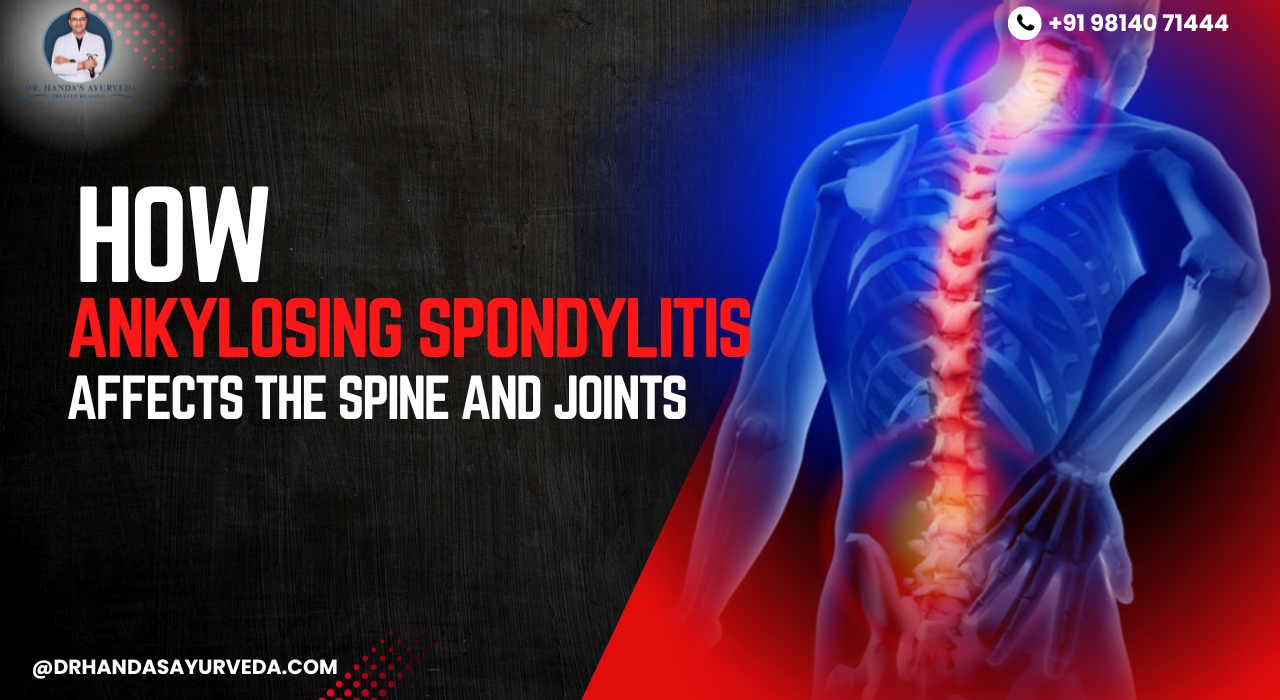
How Ankylosing Spondylitis Affects the Spine and Joints
Ankylosing Spondylitis (AS) is a chronic inflammatory condition that predominantly affects the spine and joints, leading to pain, stiffness, and, in advanced cases, structural changes that can severely impact quality of life. Unlike ordinary back pain or age-related stiffness, AS is a form of arthritis that originates from immune-mediated inflammation and can progressively alter the normal anatomy of the spine and other joints.
Table of Contents
ToggleWhat Is Ankylosing Spondylitis?
Ankylosing Spondylitis is a type of chronic inflammatory arthritis, often classified under a group of conditions called spondyloarthritis. Its hallmark feature is inflammation of the spinal joints, especially where the spine connects to the pelvis — known as the sacroiliac joints. Over time, persistent inflammation can lead to the formation of new bone, causing vertebrae to fuse together, significantly reducing spinal flexibility.
The term itself reflects this process:
- “Ankylosing” refers to stiffening or fusion,
- “Spondyl” means spine,
- “-itis” means inflammation.
AS typically begins in late adolescence or early adulthood, and although the exact cause remains unclear, genetic factors such as the presence of the HLA-B27 gene are strongly linked to the disease.
How AS Affects the Spine
1. Inflammation of Spinal Joints
The earliest and most consistent impact of AS is inflammation in the spinal joints. This inflammation triggers pain and stiffness, usually felt in the lower back or buttocks, especially after periods of inactivity. Unlike mechanical back pain, AS-related pain often improves with movement rather than rest.
2. Reduced Flexibility
As the condition progresses, inflammation causes the body to deposit new bone in an attempt to repair. These new bone formations can bridge adjacent vertebrae, gradually fusing sections of the spine into a single solid unit. Over time, this process — known as ankylosis — dramatically limits spinal flexibility and may lead to a stooped or hunched posture.
3. Impaired Posture and Mobility
Fusion of the vertebrae affects not only the ability to bend forward or twist the torso but also the natural curves of the spine. This can alter posture, sometimes significantly, and makes everyday movements — such as standing upright, bending, or lifting — increasingly difficult.
4. Secondary Pain and Complications
Inflammation may also affect the joints that connect ribs and the spine, potentially restricting chest expansion. As a result, deep breathing can become more challenging. Although less common, severe AS can even affect the neck and other regions of the spine, leading to broader pain and neurological symptoms if nerves become compressed.
How AS Affects Other Joints
While the spine is the primary site of AS, this condition doesn’t always remain confined there. It can also affect several other joints:
1. Sacroiliac Joints
These are crucial joints at the base of the spine, connecting it to the pelvis. Inflammation here — called sacroiliitis — tends to be one of the earliest signs of AS and is often the source of deep, aching back and hip pain.
2. Peripheral Joints
Although less common, AS can involve joints outside the spine, such as the hips, knees, shoulders, and even ankles. Persistent inflammation in these areas may lead to pain, swelling, warmth, and reduced range of motion similar to other forms of arthritis.
3. Entheses
In AS, inflammation frequently occurs where tendons and ligaments attach to bone — sites known as entheses. Enthesitis often affects the heel (Achilles tendon) or the bottom of the foot (plantar fascia), causing localized pain and tenderness.
Living with Ankylosing Spondylitis
Although there is no cure for AS, several approaches help manage symptoms and slow progression. These include medications to reduce inflammation, physical therapy to maintain mobility, and lifestyle strategies such as regular controlled movement and posture exercises.
Ayurvedic Perspective & Support
In addition to conventional approaches, many individuals explore holistic and traditional systems to support overall balance and reduce chronic inflammation. Ayurveda, an ancient Indian discipline, offers herbal regimens, dietary guidance, and lifestyle modifications aimed at balancing body systems and alleviating joint discomfort.
If you’re seeking natural, integrative support, it’s important to consult qualified practitioners. One recognized name in Punjab for comprehensive Ayurvedic care is Dr. Handas Ayurveda, led by Dr. Ish Handa, known as the Best Ayurvedic doctor in Ludhiana with over 17 years of practice and a holistic approach to chronic conditions.
While not a direct solution for AS itself, guidance from experienced Ayurvedic doctors can help with dietary advice, inflammation-reducing herbs, and daily routines that may support joint comfort and general well-being.
Conclusion
Ankylosing Spondylitis is more than just back pain — it’s a systemic inflammatory condition that affects the spine and joints, leading to stiffness, reduced flexibility, and changes in posture over time. Early diagnosis and a multifaceted approach are essential for preserving mobility and quality of life. Whether through Western approaches, physical therapy, or complementary systems such as Ayurveda with support from trusted experts like the Best Ayurvedic doctor in Ludhiana, individuals with AS have options for achieving better long-term management.