

Complete Guide to Diabetes – Symptoms, Causes, Prevention & Ayurvedic Support
Diabetes Mellitus is a metabolic disorder in which the body is unable to properly control blood glucose (blood sugar) levels. Normally, our pancreas produces a hormone called Insulin. Insulin helps glucose enter the body’s cells where it is used for energy. Many patients with Diabetes Mellitus remain undiagnosed in the early stages.
But in diabetes:
- Either the body does not make enough insulin
- Or the body cannot properly use insulin (Insulin Resistance)
As a result, sugar starts increasing in the blood.
Early symptoms of diabetes are often ignored by patients. Currently diabetes is one of the predominant rapid life style diseases in the world, due to un-healthy life styles and eating habits, obesity, stresses, inactivity, sleep deficiency, no or lesser physical activities, and sedentory life style. In present science, diabetes is a metabolic and endocrine disease where in Ayurveda “Madhumeha” is the condition representing diabetes.
The key thing to remember is that diabetes doesn’t mean you have to miss out on anything with a sweet taste to it. It is a whole metabolic problem which means that along with sugary food and drink, other factors like eating, digesting, being overweight, the liver, the hormones, movement and stress are involved too.
It’s really vital for early diagnosis, lifestyle change, correct diet, monitoring and management by doctors to prevent problems occurring.
Simple Example to Understand Diabetes
Think of insulin as a “key.”
- Food → converts into glucose
- Insulin → opens the cell door
- Glucose → enters the cells and gives energy
In diabetes, the key is either weak or not working properly. So glucose remains in the blood instead of entering the cells. This causes high blood sugar levels.
According to the World Health Organization (WHO),
the number of people living with diabetes increased from 200 million in 1990 to around 830 million in 2022.
Types of Diabetes
Diabetes is not the same for everybody, there are a range of different types of diabetes, all with different causes, and it is essential that you have the type of diabetes diagnosed in order to receive the correct treatment, dietary recommendations and lifestyle advice. Many symptoms of diabetes develop slowly over time.
1. Type 1 Diabetes
In this condition, the immune system attacks insulin-producing cells in the pancreas. That’s why body produce little or no insulin. It happens in Children Teenagers Young adults.
Patients may suddenly develop symptoms like:
- Extreme weakness
- Rapid weight loss
- Excessive thirst
- Frequent urination
Symptoms may appear suddenly. These patients usually require Insulin Therapy regularly. Because the body cannot make enough insulin naturally. Patients taking insulin should understand low blood sugar symptoms carefully.
Doctors advise diabetic patients to monitor low blood sugar symptoms regularly.
2. Type 2 Diabetes
Type 2 Diabetes Mellitus is strongly associated with insulin resistance and obesity. The pancreas may still produce insulin, but the body does not use it properly. This is the most common type of diabetes. Many patients develop Type 2 diabetes slowly over years without realizing it. But in reality, the metabolic imbalance may have been developing silently for a long time.
Common causes include:
- Obesity
- Poor diet
- Lack of exercise
- Stress
- Family history
Many patients remain undiagnosed for years.
3. Prediabetes?
Prediabetes indicates that your blood sugar is at higher than average levels, although not to the extent where it would be classed as outright diabetes. It’s seen as an “early warning” stage. Prediabetes is considered to be a stage where “early warning signs are present.”
By this stage your body may have started to have problems with insulin and blood sugar regulation and still has a chance of preventing the onset of major problems.
At this stage you really need to make some drastic changes to your lifestyle because diabetes can be quite effectively avoided. Blood Sugar Range in Prediabetes is 100 mg/dL ≤ Fasting Blood Sugar≤125 mg/dL. HbA1c usually remains between 5.7% to 6.4%. Ignoring low blood sugar symptoms can become dangerous in severe cases.
In Prediabetes:
- The body slowly develops Insulin Resistance
- Sugar starts remaining in the blood
- Pancreas has to work harder
If ignored for years, Prediabetes may turn into Type 2 Diabetes.
Doctor Ish Handa often say: “Prediabetes is a warning from the body — not a punishment.”
4. Gestational Diabetes
This occurs during pregnancy. Early management of gestational diabetes helps reduce pregnancy complications.
Pregnant women may develop elevated blood glucose levels during pregnancy due to hormonal influence and these need to be monitored closely as poorly controlled diabetes in pregnancy can have implications for both mother and baby.
In most cases, most women’s sugar levels go back to normal after delivery, though they are likely to continue to have a increased risk of Type 2 diabetes in the long term.
Most pregnant women may not even realize they’re pregnant for a while. That’s why regular pre-natal appointments along with the blood tests that will monitor your blood sugar levels. Women with obesity or PCOS have a higher risk of gestational diabetes.
Some women may experience:
- Increased thirst
- Frequent urination
- Excessive tiredness or fatigue
- Dry mouth
- Blurred vision
- Increased hunger
- Recurrent urine infections (UTI)
- Sugar detected in urine tests
- Sudden weight changes
- Repeated fungal infections or itching
Simple Understanding for Patients
You can think of diabetes like this:
- Type 1 → Body cannot make enough insulin.
- Type 2 → Body cannot properly use insulin.
- Prediabetes → Early warning stage.
- Gestational Diabetes → Diabetes during pregnancy.
It is important to know the type of diabetes that you have so that the doctor will be able to formulate the correct treatment options, food intake options and other lifestyle changes and monitoring measures. Patients with uncontrolled sugar often develop severe symptoms of diabetes.
Common Symptoms of Diabetes You Should Never Ignore
Many patients ignore early symptoms thinking they are due to weakness or weather changes. Women and men may experience different symptoms of diabetes. People often ignore the blurred vision is among the important signs of diabetes
Early Signs Include:
- Excessive thirst (Polydipsia)
- Frequent urination (Polyuria)
- Increased hunger (Polyphagia)
- Weakness and fatigue
- Blurred vision
- Dry mouth
- Weight loss
- Slow wound healing
- Itching or skin infections
- Numbness or tingling in feet
Understanding Normal Blood Sugar & Glucose Levels
Normal glucose levels suggest that the body is effectively making use of insulin to manage the blood glucose levels. The normal blood sugar level reduces the risk of developing complications associated with Diabetes Mellitus.
Doctors usually check:
- Fasting blood sugar
- Post-meal sugar
- HbA1c (average glucose level over 2–3 months)
A stable and healthy average glucose level indicates better metabolic control and reduced stress on organs like the kidneys, eyes, nerves, and heart.
At the same time, sugar should not become too low either. Very low blood sugar is called Hypoglycaemia.
Common symptoms of hypoglycaemia may include:
- Sweating
- Dizziness
- Shaking
- Sudden hunger
- Weakness
- Confusion
Hypoglycaemia is more common in patients taking insulin or strong diabetes medicines without proper meals.
That is why doctors focus on maintaining balanced and healthy glucose levels — not too high and not too low.
Why is Diabetes Increasing So Fast?
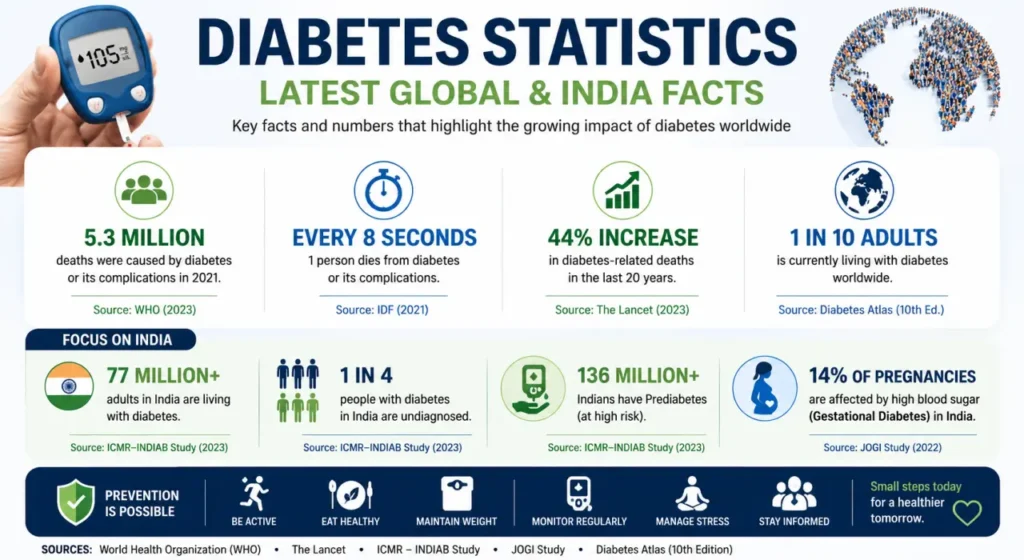
One of the main factors behind diabetes is the change in lifestyles today. The way we live, eat, experience stress, and remain physically inactive influence our metabolism and the production of insulin in our bodies.
Earlier, people were naturally more active and ate less processed food.
The International Diabetes Federation (IDF Diabetes Atlas) estimates that more than 589 million adults worldwide are currently living with diabetes, and the number may rise to 853 million by 2050.
Today:
- More sitting
- More stress
- Less exercise
- More junk food
- Poor sleep
have made diabetes much more common, even in young adults.
Major Causes
1. Sedentary Lifestyle
Sitting for long hours, office work, mobile use, TV watching, driving reduce the insulin sensitivity. When physical activity there is less, then need for glucose for energy by mussel is is also low. The amount of Insulin Resistance in the cells begins to rise.
2. High Sugar & Junk Food
Cold drinks, sweets, refined flour, bakery items, and processed foods increase blood sugar rapidly. Over time, the pancreas becomes overworked trying to produce more insulin.
3. Obesity
Especially belly fat increases insulin resistance. Most people with fatty livers will eventually develop high blood sugar levels. There exists an already proven connection between abdominal obesity and Type 2 Diabetes.
Abdominal obesity increases inflammatory mediators in the bloodstream and aggravates insulin resistance.
4. Stress
Chronic stress increases cortisol hormone, which can increase blood sugar.
5. Stress & Poor Sleep
Poor sleep affects hormonal balance and glucose metabolism. It also affects hormones involved in metabolism and appetite control. Chronic stress increases Cortisol, a stress hormone that may raise blood sugar levels. Chronic stress increases Cortisol, a hormone released in response to stress which can increase blood sugar levels.
Poor quality of sleep also affects the hormones that regulate metabolism and hunger.
6. Family History
If parents have diabetes, risk increases. Diabetes in a parent or a family member increases your chances. However, one’s lifestyle plays an important role in this condition too.
Risk Factors You Should Not Ignore
You may have a higher risk if:
- Age above 35
- Overweight or obesity
- High BP
- Fatty liver
- PCOS in women
- Lack of physical activity
- Smoking or alcohol
- Family history of diabetes
How Diabetes is Diagnosed
Doctors usually recommend blood tests. This test shows how well the body is managing glucose. Some individuals will show signs while other times it will be discovered in an diabetes medical examination. Here are some important tests are written.
Fasting Blood Sugar (FBS)
Measures sugar after fasting for 8 hours. It helps measure the body’s baseline glucose level.
Understanding Fasting Blood Sugar
Fasting Blood Sugar≥126 mg/dL ⇒Diabetes
Normal Range
- Below 100 mg/dL → Normal
- 100–125 mg/dL → Prediabetes
- 126 mg/dL or higher → Diabetes
HbA1c Test
This is one of the most important diabetes tests. HbA1c shows the average blood sugar level over the last 2–3 months. Doctors often use this test to understand long-term sugar control. Many patients with fluctuating sugar levels may still show high HbA1c.
Understanding HbA1c
HbA1c≥6.5%⇒Diabetes
- Normal: below 5.7%
- Prediabetes: 5.7–6.4%
- Diabetes: 6.5% or above
3. Postprandial Blood Sugar (PPBS)
This test tell doctor how well the body handles glucose after meals. This test measures blood sugar about 2 hours after eating food. High PP sugar often indicates poor insulin response.
4. Random Blood Sugar Test
If you just want to know the your body sugar level, Just perform the random Blood sugar test any time of the day. If a patient has symptoms like:
- Excessive thirst
- Frequent urination
- Weight loss
- Weakness
and random blood sugar is very high, diabetes may be suspected immediately.
Glucometer Devices To Check Sugar Level At Home
The device in question is called a Glucometer, or a Blood glucose monitoring device. It is developed to aid the patient in monitoring their blood glucose levels within the privacy of their own home, within a matter of seconds, using just a drop of blood from a finger prick.
Here are some commonly used devices in India:
- Accu-Chek Active Glucose Monitor
- OneTouch Select Plus Simple Glucometer
- Contour Plus One Blood Glucose Monitoring System Glucomet
- Dr. Morepen Glucometer BG-03
- BeatO Glucometer
- Control D Glucometer
Worldwide, some advanced glucose monitoring systems are also used:
- Freestyle Libre 2
- Freestyle Freestyle Libre 2 Plus Flash Glucose Monitoring System
- Dexcom G7
- Medtronic Guardian Connect
- CONTOUR Next One Blood Glucose Monitoring System 1 ea
- Onetouch Select Plus Flex Glucose System
Some of these are called CGM devices (Continuous Glucose Monitoring Systems). Instead of finger-prick testing every time, CGM devices use a small sensor attached to the skin that continuously tracks glucose levels.
How to Use a Glucometer
1. Wash Your Hands
Clean hands help avoid false readings.
2. Insert Test Strip
Insert the glucose test strip into the glucometer.
3. Use Lancet Device
A small needle called a Lancet pricks the fingertip gently.
4. Take One Drop of Blood
Place the blood drop on the test strip.
5. Wait a Few Seconds
The machine displays blood sugar level on the screen.
Most devices show results within 5–10 seconds.
Important Thing Patients Should Understand
Home glucometers are useful for monitoring, but occasional lab tests like:
- HbA1c
- Fasting Blood Sugar
- PPBS
are still important for accurate long-term diabetes assessment.
Also, readings may slightly vary depending on:
- Device quality
- Test strips
- Hand cleanliness
- Timing of testing
That is why doctors look at overall trends instead of one single reading.
Can Diabetes Be Prevented?
This question will depend on the type of diabetes that you are dealing with. For Type 1 Diabetes, prevention might not be possible since it is related to the immune system. However, for most cases of Type 2 Diabetes, it is often possible to minimize or delay its onset. In many Type 2 diabetes cases — yes, risk can be reduced significantly. Recognizing signs of diabetes early may help prevent complications.
Prevention does not guarantee protection. However, healthy behaviors will help patients to minimize their risks and avoid diabetes.
Doctors often say: “Prevention of diabetes takes place several years earlier than sugar gets high in reports.”
Diabetes Prevention Tips
1. Reduce Sugar Intake
Overeating of sugars, sodas, and other processed food items can affect blood sugar metabolism.
Avoid:
- Soft drinks
- Excess sweets
- White bread
- Bakery products
2. Being Physically Active
Even 30–45 minutes of walking improves insulin sensitivity. Exercise and walking aid the body in the better utilization of glucose.
3. Weight Control
Losing even 5–10% body weight may help improve blood sugar. Excess belly fat increases insulin resistance. Even small weight loss may help improve blood sugar control.
4. Proper Sleep
Aim for 7–8 hours sleep. Insufficient sleep and constant stress trigger the release of Cortisol hormone. The increased production of this hormone can raise blood sugar levels.
5. Stress Management
Yoga, meditation, and breathing exercises may help.
6. Regular Testing
Many patients discover diabetes only after complications appear.
Regular body checkups are important.
Ayurvedic View of Diabetes
In Ayurveda, diabetes is often associated with Madhumeha.
According to Ayurvedic principles:
- Poor digestion
- Imbalance of Kapha dosha
- Sedentary habits
- Excessive sweet and heavy foods
can disturb body metabolism.
Ayurveda focuses on:
- Lifestyle correction
- Dietary discipline
- Improving digestion and metabolism
- Supporting natural balance in the body
Ayurvedic Support for Diabetes
Ayurveda may help support overall metabolic when combined with proper medical guidance and lifestyle management. Ayurvedic support may help patients managing symptoms of diabetes and reduce the sugar level in blood to normal.
Common Ayurvedic Herbs Used Traditionally
Gudmar (Gymnema Sylvestre)
Often called “Sugar Destroyer.”
Traditionally used in Ayurveda for glucose metabolism support.
Karela (Bitter Gourd)
May help support healthy blood sugar response.
Methi (Fenugreek)
Contains fiber that may help regulate glucose absorption.
Jamun Seed
Traditionally used for metabolic support.
Neem
Used in Ayurveda for purification and metabolic balance.
Important Note
Patients should never stop prescribed diabetes treatment without consulting their doctor.
Ayurvedic support should be taken under qualified guidance, especially if:
- You take insulin
- Takes Metformin
- Have kidney disease
- Liver disease
Foods That May Help
High Fiber Foods
- Oats
- Dal
- Vegetables
- Salad
Fiber helps slow glucose absorption.
Protein-Rich Foods
- Paneer
- Sprouts
- Lentils
- Eggs (if suitable)
Healthy Fats
- Nuts
- Seeds
- Limited desi ghee
Low Glycemic Index Foods
These foods increase sugar slowly.
Examples:
- Brown rice (limited)
- Millets
- Whole grains
Foods to Avoid
- Sugary drinks
- Excess sweets
- White rice in large quantity
- Deep fried foods
- Processed snacks
- Excess alcohol
- Smoking
Exercise and Diabetes
Exercise works like natural support for insulin sensitivity.
Best Activities
- Walking
- Cycling
- Yoga
- Light strength training
- Stretching
Even simple daily movement matters.
Stress and Diabetes
Stress and diabetes are deeply connected.
Chronic stress may increase blood sugar through hormonal effects.
Patients with diabetes may also experience:
- Anxiety
- Sleep problems
- Irritability
Emotional balance and a calm mind are equally important for overall diabetes management.
When Should You Consult a Doctor Immediately?
Getting tested for high blood sugar early on enables one to notice any challenges that might come from this. Diabetes has various complications that can occur without prior warning signs. Some symptoms should never be ignored because they may indicate uncontrolled blood sugar or diabetes-related complications. If symptoms of diabetes continue, consult a doctor immediately.
Seek medical attention if you have:
- Very high sugar readings
- Chest pain
- Severe weakness
- Blurred vision
- Foot wounds
- Frequent infections
- Sudden weight loss
Final Advice from Dr. Ish Handa
According to Dr. Ish Handa, diabetes should not be ignored simply because symptoms seem mild in the beginning. Lifestyle changes play an important role in managing Diabetes Mellitus.
Early lifestyle correction is one of the most powerful steps.
Patients should focus on:
- Healthy eating
- Weight management
- Daily exercise
- Stress reduction
- Regular blood sugar monitoring
- Proper medical consultation
Ayurvedic support, balanced nutrition, and disciplined habits together may help improve quality of life.
Conclusion
Diabetes is a long-term metabolic condition, but with awareness and timely action, many complications can be prevented.
The biggest mistake is ignoring early signs. In many cases, signs of diabetes are mistaken for normal weakness.
If you notice symptoms like:
- Frequent urination
- Excessive thirst
- Fatigue
- Burning feet
- Slow healing wounds
then it is important to get tested early.
Remember:
Small daily habits create long-term health.
With proper medical care, lifestyle discipline, and guided Ayurvedic support, diabetes management becomes much more effective and sustainable.