
Premature Ejaculation: Causes, Symptoms, Types
Many men assume that premature ejaculation is simply a sign of weakness or aging. However, the condition may also be linked to psychological, hormonal, and physical factors.
Premature ejaculation is just one of several sexual problems that can affect men at different stages of life. Most men are under the impression that their premature ejaculations are merely due to old age or temporary weakness. While that may be true in some cases, premature ejaculation is also linked to other things such as psychological, hormonal and physiological causes.
Occasional premature ejaculation is common and usually not a cause for concern. However, persistent symptoms may affect confidence, relationships, and quality of life. Many men avoid discussing the problem for many months or even years because they are too ashamed about this matter.
Some men with premature ejaculation may also experience erectile dysfunction, although the two conditions are not the same.
“In clinical practice, I often find that stress, poor sleep, and anxiety play a larger role in premature ejaculation than most men realize.”
— Dr. Ish Handa
How Common Is Premature Ejaculation?
Premature ejaculation is considered one of the most common sexual concerns affecting men worldwide. Some men experience it from their very first sexual encounters, while others develop the condition later in life due to stress, health conditions, lifestyle changes, or relationship factors.
Many men avoid seeking help because they feel embarrassed discussing sexual concerns.
Several international studies estimate that approximately 20% to 40% of men worldwide may experience premature ejaculation during their lifetime.
Some reports suggest that nearly 1 in 3 men have faced symptoms of premature ejaculation at some stage, making it one of the most frequently reported male sexual disorders.
What makes this disorder unique is that it does not have an upper age limit for its onset. Premature ejaculation can affect adult men of different ages, including younger and older men.
Facts About Premature Ejaculation
- Premature ejaculation is often reported as the most common male sexual dysfunction worldwide.
- Around 20% to 40% of men may experience symptoms significant enough to affect their sexual satisfaction.
- Many men never seek professional help due to embarrassment or the belief that the condition will improve on its own.
- Premature ejaculation can occur alongside other sexual concerns, including erectile difficulties and reduced sexual confidence.
- The condition may have physical, psychological, or lifestyle-related causes, and in many cases, multiple factors contribute simultaneously.
Difference Between Occasional and Persistent Premature Ejaculation
Occasional Premature Ejaculation
Occasional premature ejaculation happens from time to time and is often linked to temporary circumstances. This does not necessarily indicate an underlying sexual disorder. Even men with normal sexual health may occasionally experience early ejaculation.
Various life circumstances can affect sexual performance. Sometimes stress at work, poor sleep, problems within relationships, nervousness, extreme excitement, drinking alcohol, or no sexual contact for some time may cause problems with sexual performance of a person. As soon as this situation changes, a person usually experiences normal sexual performance.
For Example:
- High stress at work
- Performance anxiety
- Lack of sleep
- Emotional tension
- Long periods of abstinence
- New relationship excitement
A man may experience early ejaculation during one encounter and return to his usual sexual performance during the next few encounters.
Think of it this way:
“Just as a person can occasionally have a bad night’s sleep without having insomnia, a man can occasionally experience early ejaculation without having premature ejaculation as a medical condition.”
Persistent Premature Ejaculation
Persistent premature ejaculation occurs repeatedly over a prolonged period and is not limited to isolated incidents. Premature ejaculation is an ongoing health condition whereby a man experiences inability to control his ejaculation during sexual activities. While one-time incidents of premature ejaculation are normal, this health condition can occur on a continuous basis over a period of months or even years if not treated.
The causes of premature ejaculation can be varied. In some cases, psychological problems such as stress, anxiety, and other mental problems may be the cause. In other cases, physical factors such as imbalanced hormones, increased sensitivity of the penis, problems in the prostate glands, or even diabetic problems can cause premature ejaculation.
Common characteristics include:
- Ejaculation occurs sooner than desired during most sexual encounters.
- Difficulty delaying ejaculation despite trying to control it.
- Feelings of frustration, embarrassment, or loss of confidence.
- Relationship stress related to sexual satisfaction.
- Ongoing concern about sexual performance.
A Simple Patient-Friendly Rule:
“If early ejaculation happens once in a while, it is usually not a cause for concern. If it happens repeatedly and begins affecting confidence, relationships, or quality of life, it deserves professional attention.”
What Is Considered Normal Ejaculation Timing?
There is no single “normal” ejaculation time that applies to every man. Sexual experiences vary widely between individuals, and satisfaction depends on many factors beyond the duration of intercourse alone.
Studies have demonstrated that the period between vaginal insertion and ejaculation can differ greatly from one healthy individual to another. While some may release quickly, others may delay their ejaculation for a much longer period of time. Normalcy can be measured based on whether both parties are happy and the male has some control over his ejaculation.
“Normal sexual performance is not defined by a stopwatch. The ability to enjoy intimacy and maintain reasonable control over ejaculation is often more important than the exact number of minutes.”
Dr Ish Handa
Why Timing Varies Among Men
Several factors can influence ejaculation timing, and these variations are entirely natural.
Age
Sexual function naturally changes with age. Younger males might be experiencing greater arousal and quicker ejaculation while older men might see their sexual desire, erectile function, or ejaculations change.
Level of Excitement and Arousal
How aroused a man is can play an important role in how long he lasts before ejaculation. If the level of excitement is extremely high, it is possible that some men would ejaculate faster than usual.
Sexual Inactivity
A man who hasn’t been sexually active for an extended period might sometimes find himself ejaculating faster than he should be doing.
Physical Factors
Certain general health issues like diabetes, obesity, hormone changes, cardiovascular diseases, and neurologic issues might have an effect on sexual functions and ejaculation times.
Mental and Psychological Factors
Various mental conditions and psychological stress can affect sexual performance. Many men will experience differences in their sexual function when having certain difficulties in life.
Other Lifestyle Factors
Sleeping disorders, cigarette smoking, alcoholism, poor diet, sedentary lifestyle, and lack of exercise might also have some effect on sexual performance.
Focus on Control Rather Than Minutes
Many men become concerned because they are comparing oneself to unrealistically exaggerated examples in movies, Internet, and from friends. Doctors usually care more about ejaculation control and sex satisfaction than time spent making love.
A helpful way to think about it is:
“Normal ejaculation timing is not about lasting a certain number of minutes. It is about having enough control to enjoy a satisfying sexual experience without causing distress to yourself or your partner.”
Importance Of Satisfaction Over Exact Minutes
Some men concentrate so much on time that they ignore what is really important for a healthy sex life: mutual pleasure, an emotional connection, and confidence.
As noted by medical authorities, there is no set “ideal” length of time, measured in minutes, that would constitute excellent sexual performance. More importantly, what matters is how each of the two participants feels about their sexual encounter.
Signs That Satisfaction Matters More Than Timing
A man may have perfectly healthy sexual function even if intercourse does not last for an extended period when:
- He feels reasonably in control of ejaculation.
- Both partners are generally satisfied with their sexual relationship.
- Sexual activity does not cause distress.
- Intimacy remains enjoyable and comfortable.
- There is open communication between partners regarding sexual expectations.
Understanding this concept can help men separate normal variations in sexual timing from genuine concerns that may require professional evaluation.
Types of Premature Ejaculation
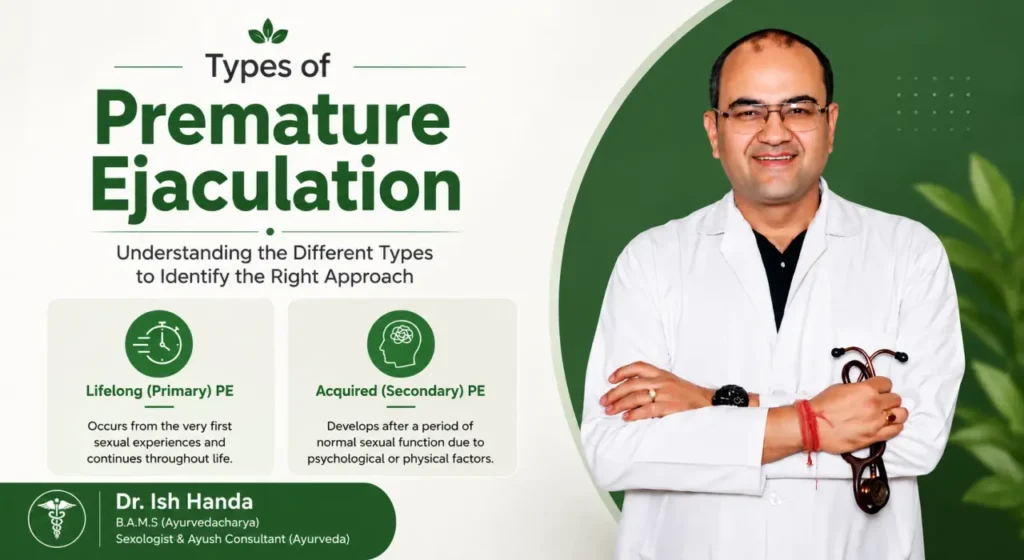
Each individual who suffers from this problem does so in a different way. Some individuals have always had problems controlling ejaculation during sexual intercourse ever since they became sexually active, whereas others have suffered from this disorder later on in life. It may be helpful to know the kind of premature ejaculation that one is suffering from.
In medicine, there are basically two kinds of premature ejaculation: Lifelong and Acquired
Lifelong Premature Ejaculation
Primary or lifelong premature ejaculation is a disorder where an individual struggles to control ejaculation throughout his entire lifetime. It is normally true in most cases that the problem affects almost all sexual activities and does not show any changes over time.
For those men who suffer from lifelong premature ejaculation, It will always be true that they have struggled to maintain control over ejaculation irrespective of their sexual partners, relationship situations, and other factors in their lives.
Common Characteristics of Lifelong Premature Ejaculation
- Symptoms begin during the earliest sexual experiences.
- Difficulty delaying ejaculation occurs consistently.
- The condition is present across different relationships and situations.
- Symptoms are not usually linked to a recent illness or life event.
- The issue often causes ongoing frustration and reduced sexual confidence.
Example
A 28-year-old man reports that since his first sexual encounter as a teenager, he has consistently ejaculated sooner than desired. The pattern has remained similar throughout different relationships despite otherwise good health.
Acquired Premature Ejaculation
Acquired premature ejaculation, also known as secondary premature ejaculation, develops after a period of previously normal ejaculation control. In other words, the man was able to maintain satisfactory sexual performance in the past but later begins experiencing persistent difficulties.
This type is often associated with an identifiable physical, psychological, or lifestyle-related factor.
Common Characteristics of Acquired Premature Ejaculation
- Symptoms appear after months or years of normal sexual function.
- The condition develops gradually or suddenly.
- The problem may be linked to a specific health condition or life event.
- Symptoms may worsen during periods of stress or illness.
- The onset often causes concern because it represents a noticeable change from previous sexual performance.
Example
A 42-year-old man reports normal sexual performance for many years. However, over the past six months, he has noticed a significant reduction in ejaculation control following increased work-related stress and poorly controlled diabetes.
This situation may be consistent with acquired premature ejaculation.
Lifelong vs Acquired Premature Ejaculation: Quick Comparison
| Lifelong Premature Ejaculation | Acquired Premature Ejaculation |
|---|---|
| Present since the first sexual experiences | Develops after a period of normal sexual function |
| Usually remains consistent throughout life | Appears later in life |
| Often related to biological or long-standing factors | Often linked to health conditions, stress, or lifestyle changes |
| Occurs across most relationships and situations | May begin after a specific trigger or event |
| The man may never have experienced satisfactory ejaculation control | The man previously had satisfactory ejaculation control |
What Are The Main Symptoms Of Premature Ejaculation?
Ejaculation Sooner Than Desired
One of the most common symptoms is ejaculating earlier than desired during sexual activity. The point is not so much in how long he has sexual intercourse but in his inability to control ejaculation.
Inability To Delay Ejaculation
Men who suffer from this problem tend to notice that ejaculation takes place regardless of their attempts to postpone it. This inability to control ejaculation becomes one of the most irritating factors and usually happens during each sexual act that takes place.
Frustration and Loss Of Confidence
The regular occurrence of premature ejaculation makes men feel bad about themselves. They may start having problems with their sexual acts because of worries or even embarrassment and, possibly, even begin experiencing some sexual anxiety before sex.
Relationship Concerns
Sometimes premature ejaculation may lead to the creation of difficulties within a relationship, especially when there is little communication regarding expectations from sexual acts. Men worry about making their partners unhappy while couples become unsatisfied with what is happening.
Anxiety
Men suffering from premature ejaculation often start being concerned about their sexual functioning. They always tend to be preoccupied with thoughts related to whether or not they are going to ejaculate prematurely or satisfy their partners. Performance anxiety can contribute to extra stress and, in some instances, intensify the problem.
Embarrassment
Multiple occurrences of premature ejaculation can result in men’s feeling ashamed and self-conscious about it. In many cases, men may feel awkward talking to their partners about the problem and consulting professionals about it.
Avoiding Intimacy
Over the time, men who experience fear of premature ejaculation may stop having sex at all. They can become afraid of engaging in any intimate contacts because of the fear of premature ejaculation.
What Causes Premature Ejaculation?
Premature ejaculation can result from psychological, physical, and lifestyle-related factors. Most men with premature ejaculation report a persistent lack of control over ejaculation and significant distress related to their sexual performance.
Many men occasionally ejaculate sooner than expected, especially during periods of stress, excitement, or after a long period without sexual activity. However, when these symptoms occur repeatedly and begin affecting confidence, relationships, or quality of life, they may indicate premature ejaculation.
Psychological Causes
Psychological and emotional state can be very important for a successful sexual activity. Some of the main psychological reasons that cause premature ejaculation are:
Performance Anxiety: Stress related to sexual performance is a serious obstacle to relaxation.
Stress: Work or financial problems or any other stresses can affect ejaculation.
Conflicts within Relationship: Relationship difficulties can contribute to emotional stress and affect sexual performance.
Depression: It can influence sexual drive and performance.
Physical Causes
Some illnesses and biological changes may be a factor causing early ejaculation.
Hormonal Imbalance: Disruptions in the levels of hormones responsible for sexual activity can cause an impact on ejaculation.
Prostate Problems: Illnesses or inflammation affecting the prostate gland may cause changes in sexual performance.
Overactive Thyroid and Hypothyroidism: These thyroid disorders have been known to cause changes in sexual function.
High Sensitivity of Nerves: Increased sensitivity of nerves can make it harder for a man to control ejaculation.
Lifestyle Factors
Smoking: May affect blood circulation and general health.
Excessive Alcohol Consumption: Can interfere with normal sexual function.
Lack of Exercise: Reduced physical activity may negatively impact stamina and overall well-being.
Poor Sleep: Sleep deprivation can affect hormone levels, energy, and sexual performance.
Can Stress And Anxiety Lead To Premature Ejaculation?
Yes, there are certainly many things that could be said about how stress and anxiety play into premature ejaculation problems. Although physical causes are common, emotional wellness is often a big factor behind a man’s ability to control his ejaculation.
Stress triggers the release of hormones such as adrenaline and cortisol. These hormones prepare the body to respond to challenges but can also disrupt normal sexual responses.
When stress levels remain high, a man may experience:
- Increased nervousness during intimacy.
- Difficulty relaxing during sexual activity.
- Reduced focus on pleasure and intimacy.
- Excessive concern about sexual performance.
- Faster progression toward ejaculation.
Performance anxiety is one of the most frequently reported psychological factors associated with premature ejaculation.
This occurs when a man becomes excessively concerned about his sexual performance, including:
- Whether he will satisfy his partner.
- How long intercourse will last.
- Whether he will lose control too quickly.
- Fear of repeating a previous unpleasant experience.
Can Diabetes Increase The Risk Of Premature Ejaculation?
Yes, diabetes could be a factor behind premature ejaculation for some men, despite the condition being mostly linked to erectile dysfunction. The effect of diabetes on the sexual health of men could be due to the effect of diabetes on various aspects such as the nerves, hormones, blood vessels, and mental state.
If a man with diabetes experiences persistent premature ejaculation or other sexual concerns, a professional evaluation can help determine whether diabetes-related changes or other underlying factors may be contributing to the problem.
However, just because someone suffers from diabetes does not necessarily mean that they have premature ejaculation.
“Diabetes does not only affect blood sugar levels. It can influence nerve health, circulation, hormonal balance, and emotional well-being, all of which play important roles in sexual performance.”
By Dr. Ish Handa
Nerve Damage (Diabetic Neuropathy)
Chronically high levels of sugar in your blood can damage your nerves in the whole body, including those used during sexual intercourse.
Healthy nerves play an important role in the proper coordination of arousal, sensation, erections, and ejaculation.
This can contribute to:
- Changes in penile sensation.
- Altered ejaculation patterns.
- Reduced sexual confidence.
- Other sexual health concerns.
- Poor Blood Circulation
Hormonal Changes
Some men with diabetes may experience hormonal imbalances, including lower testosterone levels. Changes in hormone levels can affect overall sexual health and may contribute to concerns about ejaculation timing.
Hormones influence:
Sexual desire.
Energy levels.
Mood.
Sexual performance.
Does Excessive Masturbation Affect Ejaculation Control?
This is the most commonly asked question by those who suffer from premature ejaculation. Although masturbating is a natural form of sexual activity which does not necessarily lead to premature ejaculation in itself, there are certain aspects of masturbation that can contribute towards the condition.
It has not been proven that masturbation results in early ejaculation in men. But there is evidence that people who tend to rush to have an orgasm as fast as possible train their bodies to do the same thing in future sessions.
Some men may notice changes in ejaculation control if they:
- Frequently rush masturbation due to lack of privacy.
- Develop a habit of reaching orgasm very quickly.
- Experience guilt, anxiety, or stress related to sexual activity.
- Become overly focused on immediate climax rather than control.
- Use excessive stimulation repeatedly over long periods.
When Should It Be A Concern?
A man may consider professional guidance if he notices:
- Persistent premature ejaculation during partnered sexual activity.
- Reduced sexual confidence.
- Anxiety about sexual performance.
- Difficulty controlling ejaculation consistently.
- Sexual concerns affecting relationships or quality of life.
In Dr. Ish Handa’s Clinical Experience
In my clinical experience, newly married men, men living away from their spouses, and men under chronic work-related stress frequently report concerns related to ejaculation control. One common observation is that many patients initially believe their condition is caused solely by physical weakness or aging. However, a detailed evaluation often reveals that the situation is much more complex.
Stress, anxiety, poor sleep, relationship concerns, diabetes, hormonal imbalances, unhealthy lifestyle habits, and reduced sexual confidence can all play a role in affecting ejaculation control.
Dr. Ish Handa explains:
“One of the biggest misconceptions is that premature ejaculation is always caused by weakness. In reality, sexual health is influenced by physical health, mental well-being, hormonal balance, lifestyle habits, and relationship factors. Understanding the underlying cause is often the first step toward improvement.”
Another common pattern observed in practice is that many men delay seeking help for months or even years because they feel embarrassed discussing sexual concerns. Unfortunately, this delay can increase anxiety, reduce self-confidence, and create unnecessary stress within relationships.
Individuals who are experiencing persistent premature ejaculation, loss of sexual confidence, or other sexual health concerns may benefit from consulting a Best Sexologist Doctor in Ludhiana for a comprehensive evaluation and personalized guidance.
Final Words From Dr. Ish Handa
Dr. Ish Handa believes that sexual wellness should be approached as part of overall health. By addressing the root causes rather than focusing only on the symptoms, many men can work toward improved confidence, healthier relationships, and better long-term sexual well-being. You can book your appointment with Dr. Ish Handa for a comprehensive evaluation of premature ejaculation and other male sexual health concerns.
Understanding Premature Ejaculation is not about the number of minutes of intercourse. Rather, you should look into whether or not you have control of the moment of ejaculation and whether the problem causes you distress and affects your relationship or quality of life.
There are various factors including but not limited to stress, anxiety, lack of sleep, diabetes, poor lifestyle choices, hormonal imbalance, and health issues that can affect one’s sexual performance. That is why everyone must be assessed as a whole person, not just from a symptom standpoint.
If you have been experiencing persistent premature ejaculation, loss of sexual confidence, or other sexual concerns, it may be beneficial to consult a qualified healthcare professional for a comprehensive evaluation. Every man’s situation is unique, and personalized guidance can help identify the most appropriate path forward.
FAQ
Premature Ejaculation – Is It Curable?
It depends on what caused the trouble. Sometimes premature ejaculation problems are related to stress, anxiety, lack of sleep, bad habits, or some health conditions.
Can Newly Married Men Experience Premature Ejaculation?
Yes, premature ejaculation problems often happen to young married men. The reasons for that could be excitement, stress, performance anxiety, nervousness, lack of experience during intercourse.
Does Stress Cause Premature Ejaculation?
Stress can increase anxiety, make relaxation more difficult during intimacy, and contribute to reduced control over ejaculation.
Does Masturbation Cause Premature Ejaculation?
As a rule, masturbation does not cause premature ejaculation problems. On the contrary, trying to ejaculate quickly in case of frequent masturbation can influence ejaculation.
Can Diabetes Increase The Risk Of Premature Ejaculation?
Premature ejaculation is associated with diabetes as it affects nerves, blood flow, hormones, and emotions. Not all diabetic patients suffer from premature ejaculation.
Is Premature Ejaculation The Same As Erectile Dysfunction?
No. Premature ejaculation and erectile dysfunction are different conditions. Premature ejaculation involves difficulty controlling ejaculation, while erectile dysfunction refers to difficulty achieving or maintaining an erection. Some men may experience both conditions at the same time.
When Should I Consult A Sexologist?
You should consider professional evaluation if premature ejaculation occurs repeatedly, affects your confidence, causes relationship concerns, or reduces your overall quality of life. Early assessment can help identify possible contributing factors and appropriate management options.
Can Premature Ejaculation Affect Relationships?
It can. Persistent premature ejaculation may create frustration, communication difficulties, or dissatisfaction for one or both partners. Open communication and professional guidance can often help couples address these concerns effectively.