
Understanding Premature Ejaculation: Diagnosis, Causes, Tests & Ayurvedic Management
Many men believe that diagnosing premature ejaculation is simply a matter of measuring how long intercourse lasts. In reality, the diagnosis is far more comprehensive. Doctors consider your symptoms, medical history, emotional wellbeing, relationship concerns, and any underlying health conditions before deciding on the most appropriate treatment.
Accurate diagnosis is a prerequisite to finding out the best method of treatment. You cannot find an effective solution without determining the causes of the problem first. In the course of the diagnosis, the doctor will need to ask you questions related to your medical history, lifestyle, relationships, and other diseases you may have.
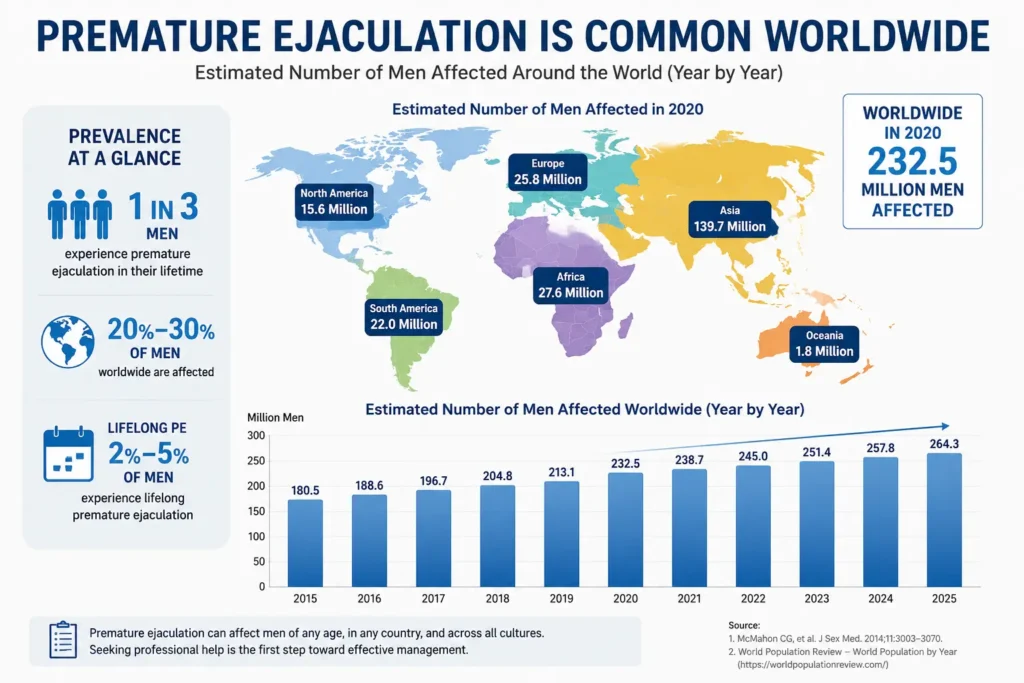
Studies suggest that lifelong premature ejaculation affects around 2–5% of men, while acquired premature ejaculation is more common.
According to the American Urological Association (AUA)
If you would like to understand the causes, symptoms, and different types of premature ejaculation, read our detailed guide on Premature Ejaculation – Causes, Symptoms, and Types.
Expert Insight from Dr. Ish Handa
Dr. Ish Handa is an Ayurvedic doctor with over 17 years of expertise in male reproductive health, sexual dysfunctions, liver diseases, diabetes, and other chronic lifestyle-related conditions. Over the span of his practice, he has treated thousands of people using personal Ayurvedic therapies that involve diagnosing the root cause of a disease instead of treating its symptoms.
In 2026, Dr. Ish Handa received the Best Ayurvedic Doctor in Punjab Award in recognition by DIB for his contribution to Ayurvedic healthcare. His approach combines the traditional principles of Ayurveda with careful clinical evaluation, lifestyle guidance, and patient education to provide personalised care.
Clinical Insight – Dr. Ish Handa
“Many men assume premature ejaculation is caused by only one factor. In reality, I often find that stress, poor sleep, diabetes, digestive health, and anxiety may all contribute together. This is why I prefer a comprehensive assessment before recommending Ayurvedic treatment.”
How Is Premature Ejaculation (PE) Diagnosed?
Doctors diagnose premature ejaculation through a detailed consultation rather than a single laboratory test. In the course of the consultation, the physician attempts to find out when the condition began, its frequency, as well as how much it influences the confidence level, the relationship with your partner, or your general well-being.
As for my clinical practice, I pay more attention to the psychological state of my patients, rather than the actual time of their sexual activity. Some men might ejaculate rather rapidly, but not be worried about it and some others might be quite frustrated even though the timing is somewhat different. This is why the diagnosis is based on the entire picture.
The consultation also includes an assessment of your medical history, medication, lifestyle and any probable cause that may lead to premature ejaculation like diabetes, thyroid disorder and prostate problems.
According to the Ayurvedic philosophy, there are certain other things that are to be considered such as Prakriti (your body constitution), Agni (strength of digestion), Dosha (balance of doshas), sleep, stress and lifestyle. Knowing about these helps me understand the imbalance within you instead of treating the symptoms alone.
A review published in the Journal of Sexual Medicine estimates that 20%–30% of men experience premature ejaculation at some point in their lives.
⎯ McMahon CG, et al. The Journal of Sexual Medicine – (2014)
What Questions Will Your Doctor Ask During the Consultation?
The consultation is one of the key procedures in diagnosing PE. There is no single test or question which can determine whether one has this problem or not. Instead, the physician will need to ask a number of questions in order to evaluate the patient’s complaints and find out their general state of health and causes of the disorder.
I always encourage my patients I advise my patients to be honest when answering those questions. The more precise the answers are – the easier it is to find the cause and prescribe the right treatment.
When did the problem begin?
First of all, the physician would like to learn when the problem started – whether it has been bothering you since your first sexual intercourse or whether it occurred after a while. In other words, whether PE is lifelong or acquired.
How often does it occur?
You might be asked whether early ejaculation happens always, almost all the time, or only under certain conditions. The frequency of its occurrence gives an idea of the seriousness and nature of the problem.
Do you have a sense of control over ejaculation?
Lack of control is one of the major signs of premature ejaculation. You may be asked by your physician whether you can control the process of ejaculation or not.
Does it affect your confidence and relationship?
The problem of early ejaculation may affect not just physical but psychological aspects as well. Your physician may ask whether the condition is affecting your mental well-being and relations with your partner.
Do you have any other sexual problems?
Your doctor will also find out if you suffer from other problems such as problems with erection, low sexual desire, pain during ejaculation, reduced sexual satisfaction or previous treatments for sexual problems.
Physical Examination and Medical History
The American Urological Association (AUA) and the Sexual Medicine Society of North America (SMSNA) recommend that treatment for premature ejaculation should be individualised. Depending on the underlying cause, management may include behavioral techniques, counseling, medication, or a combination of approaches.
A detailed medical history and physical examination can assist your physician in determining this problem. Even though most men get diagnosed based on their history alone, a physical examination may sometimes be necessary in case your symptoms indicate any underlying condition.
Medical History
During the process of diagnosing you, your physician may inquire about your general issue, past illnesses, operations, medications or supplements you currently take, among other things. Disorders like diabetes, thyroid problems, hormonal imbalance, illness or problems related to your prostate can sometimes have an impact on your sexual functions.
Physical Examination
If necessary, a physician can conduct a thorough physical examination to determine your overall status. This can involve measuring your blood pressure and weight, as well as signs of any hormonal or neurological conditions that could be associated with your condition.
Sexual Problem Evaluation
Evaluation of your sexual issue is a crucial step in diagnosing you. Your physician may inquire about the quality of your erections, levels of sexual drive, treatment attempts, problems in your relationship, and any pain that you experience when having sex.
Lifestyle Assessment
Lifestyle is very influential when it comes to the state of your sexual issues. Your doctor will likely inquire about your diet, exercise, sleep, stress levels, smoking, alcohol intake, and work. Knowing the above information helps understand whether you need to change your lifestyle in order to improve your state.
Ayurvedic Assessment
The assessment does not only take into account the symptoms that are displayed by the patient, but also includes other elements. While talking with my patients, I also find out what his or her Prakriti is (physical constitution of the body), what their Agni is like (strength of digestion), Dosha balance, sleep, stress levels and routine.
Are Any Tests Required to Diagnose Premature Ejaculation?
Doctors diagnose premature ejaculation through a detailed consultation rather than a single laboratory test. In most cases, no specific tests are required. However, a thorough discussion, along with physical examination and the patient’s history, may be enough to determine the condition.
However, in cases when the physician suspects that some other underlying condition might be behind the development of the problem, a series of tests may be suggested. The tests themselves do not have anything to do with the diagnosis of premature ejaculation. Rather, they are conducted to detect other health conditions that might affect the patient’s sexual performance.
Blood Tests
In some cases, blood tests are prescribed to diagnose conditions like diabetes, thyroid diseases, hormonal imbalance, and other problems that may affect one’s sexuality.
Urine Test
The patient may be prescribed a urine test in cases when there are signs of a possible urinary tract infection or other urinary problems.
Hormone Tests
If there are signs of a hormonal imbalance, your doctor may prescribe you tests related to hormones, including testosterone levels.
Additional Investigations
In some situations, further evaluation or referral to another specialist may be needed if there are signs of neurological disorders, prostate disease, or other medical conditions that require specialised care.
Tests are recommended only when they are clinically necessary. For most men, an accurate diagnosis can be made through a detailed consultation and examination.
⎯ Dr. Ish Handa
Can Premature Ejaculation Improve Naturally?
In some cases, yes.
It can also be improved naturally, especially when the condition is associated with stress, anxiety, insomnia, poor habits, or issues in the relationship. However, should the problem occur persistently, one needs to see a physician, instead of opting for self-treatment methods.
In my clinical practice, I often see men focusing only on delaying ejaculation. Improving overall physical and emotional health is often just as important as focusing on delaying ejaculation itself. Some lifestyle modifications will not bring immediate results. However, they will help achieve better sexual performance in the long term.
Stay Physically Active
Exercising regularly will help improve blood circulation and hormonal balance, relieve stress, and keep you physically fit. Activities such as walking, cycling, swimming, yoga, and strength training help improve cardiovascular fitness, reduce stress, and support hormones.
Aim for at least 150 minutes of moderate physical activity each week, unless your doctor advises otherwise.
Manage Stress and Anxiety
Chronic stress increases muscle tension and performance anxiety, both of which may contribute to premature ejaculation in some men.
Stress and anxiety can influence sexual performance and exacerbate premature ejaculation symptoms. Relaxation methods such as deep breathing, meditation, yoga, or mindfulness may be helpful in reducing stress and improving psychological health.
Sleep Well
Quality sleep supports hormone production and emotional stability. Adults should sleep about 7 to 9 hours per night to maintain their good physical and emotional state.
Strengthen Your Pelvic Floor
Exercises for strengthening the pelvic floor (Kegel) may be useful in enhancing muscles’ control in certain patients. When done properly and regularly, Kegel exercises can be considered one of the components of your treatment plan prescribed by your doctor.
However, these exercises should be performed correctly, as excessive or incorrect practice may not provide the desired benefit.
Eat a Balanced Diet
A balanced diet supports overall health, hormone function, and energy levels. Although no single food has been proven to cure premature ejaculation, eating a nutritious diet can contribute to better physical health, which may indirectly support sexual wellbeing.
Foods That May Support Male Sexual Health
It is generally perceived that consumption of a certain type of fruit, herb, or dry fruit will provide an absolute cure for this condition. But the truth is that there is no specific food item that has ever been medically or scientifically proved to be a cure for early ejaculation. A healthy and balanced diet is crucial to ensure overall good health, which in turn ensures a proper sexual performance.
Good nutrition cannot replace any form of diagnosis or treatment, but it certainly helps to improve the functioning of your body. Healthy eating, along with regular physical activity, enough sleep, effective stress management, and appropriate medical/Ayurvedic treatment, can go a long way in improving reproductive and overall health.
Nuts and Seeds
There is a variety of different types of nuts and seeds like almonds, walnuts, pumpkin seeds, flax seeds, and sesame seeds that are good for our health and must be included in our daily diet. They provide healthy fats, protein, vitamins, and minerals that support overall health.
Fruits and Vegetables
There are different kinds of fruits and vegetables providing us with vitamins, minerals, fibers, and antioxidants that prevent any kind of cellular damage and boost our immunity system.
Whole Grains and Legumes
Different sources of whole grains and legumes like oats, brown rice, whole wheat, lentils, chickpeas, and beans give us complex carbohydrates and proteins. They provide sustained energy, fibre and support metabolic health.
Protein Sources
The proteins help in repairing the body tissues and muscles. Proteins can be obtained from various sources such as milk, curd, panneer, eggs, fish, meat, pulses, and soya according to individual needs.
How Does Ayurveda Explain Premature Ejaculation?
Ayurveda views premature ejaculation differently from modern medicine. Rather than focusing only on the symptom, it seeks to understand the underlying imbalance contributing to the condition.
During an Ayurvedic treatment, the consultation goes beyond sexual health issues and takes into consideration other factors which could contribute to this problem, such as digestive processes, sleep, stress, lifestyle, eating habits, physical and psychological state of a patient.
Vata Dosha Imbalance
According to Ayurvedic principles, Vata Dosha controls movements and the nervous system in the body. The imbalance of Vata Dosha results in lack of control over ejaculation, nervousness, restlessness or hyperactive reactions in some men.
Weakness of Shukra Dhatu
Shukra Dhatu is a tissue related to reproductive function. In accordance with Ayurveda teachings, insufficient nourishment of this tissue may result in reproductive problems and reduced sexual stamina.
Digestive System (Agni)
Healthy digestive processes (Agni), according to Ayurveda teachings, are very important for overall health of the body. Impaired Agni during long periods of time may negatively influence the nutrition of the body tissues, including those related to reproductive health.
Stress and Lifestyle
Psychological stress, inadequate sleep, improper eating patterns, smoking, drinking, and a lack of physical activity all contribute to a person’s general health condition. According to Ayurvedic medicine, it is also an important aspect due to its potential influence on a person’s sexual health.
Every person a unique body constitution (Prakriti), thus, in the practice of Ayurvedic medicine, since each individual has his own unique body constitution (Prakriti) and symptoms, the therapy in Ayurveda is highly customized.
Not sure what is behind your symptoms? Book an appointment with Dr. Ish Handa to find out about your medical history and get a customized treatment plan according to your lifestyle.
👉 Book a Consultation with Dr. Ish Handa
How Can Ayurveda Help Manage Premature Ejaculation?
Treatment in Ayurveda is not limited to the process of delaying ejaculation temporarily. It is much more concerned about improving the health condition of a patient and correcting the possible causes that lead to the problem. Thus, a treatment helps restore balance in the body.
Since there are many possible reasons for reduced ejaculatory control, each case needs an individual treatment approach. The Ayurvedic doctor evaluates your symptoms, health history, Prakriti, Agni, lifestyle, stress levels, and the state of your health before suggesting the treatment.
Herbal Medicines
In order to prescribe an appropriate treatment, the Ayurvedic doctor may suggest herbal preparations to you that will depend on the individual assessment. Herbal medicines, when appropriate, are selected after an individual assessment and are tailored to the patient’s health status and Ayurvedic constitution.
Dietary Guidance
Diet is an important aspect of treatment according to Ayurvedic principles. Depending on your body constitution and health state, the doctor may give you some recommendations for improving your daily nutrition.
Lifestyle Changes
Changes in everyday activities can also be considered as a complementary option to therapy. Adhering to a normal sleep cycle, exercising regularly, dealing with stress, quitting smoking, drinking alcohol in moderation, and having a proper daily regimen are among the practices usually advised for better general health.
Yoga and Stress Management Techniques
Both stress and performance anxiety may become causes of the emergence of premature ejaculation in certain men. Yoga, meditation, breathing techniques, and mindfulness practices can be used for handling stress and improving psychological condition in addition to other methods of treatment.
Follow-Up Sessions
An Ayurvedic treatment course is not limited to a single appointment. Follow-ups will give you an opportunity for your doctor to track your condition and adjust the therapy accordingly to your present health requirements.
When Should You See a Doctor?
Most men will suffer from early ejaculation in one point of their lives. Occasional episodes are usually nothing to worry about. However, if the problem occurs more often than you can count and makes you upset, affects you psychologically or makes a negative impact on your relationship or self-confidence, then you should consider consulting a doctor.
The reasons why people are avoiding visiting doctors in case of this problem are embarrassment and hope that the problem would solve itself. Actually, the problem is rather widespread, and talking to a professional can be considered as the first step toward solving the problem.
You should see a doctor if:
- Loss of ejaculatory control is a frequent occurrence and has been going on for many months now.
- Premature ejaculation is stressing you out or making you anxious or affecting your confidence.
- It is impacting your sexual life and is creating problems in your relationship.
- Along with this problem, you have erectile dysfunction, pain while ejaculation, or lack of libido.
- You have any other medical condition like diabetes or thyroid that may be responsible for your problem.
- The above methods or solutions have not worked on their own.
Ready to Speak with Dr. Ish Handa?
👉 Schedule your consultation with Dr. Ish Handa today.
Dr. Ish Handa’s Advice
If early ejaculation is causing you anxiety and stress, then do not let it go untreated since you will need to deal with it sooner or later.
Being an Ayurvedic practitioner with over twenty years of practice in this field, I have learned that the best way to help someone is to first understand what causes the problem. No two patients are alike, which is why an assessment is always necessary before beginning treatment.
Consult Dr. Ish Handa for a Personalised Evaluation
Diagnosing it correctly is the way to move forward towards solving the problem. While consulting with you, Dr. Ish Handa will give your condition his attention and make sure that all your symptoms, your medical background, and other factors that may impact your health are taken into account when developing your personalized treatment plan.