
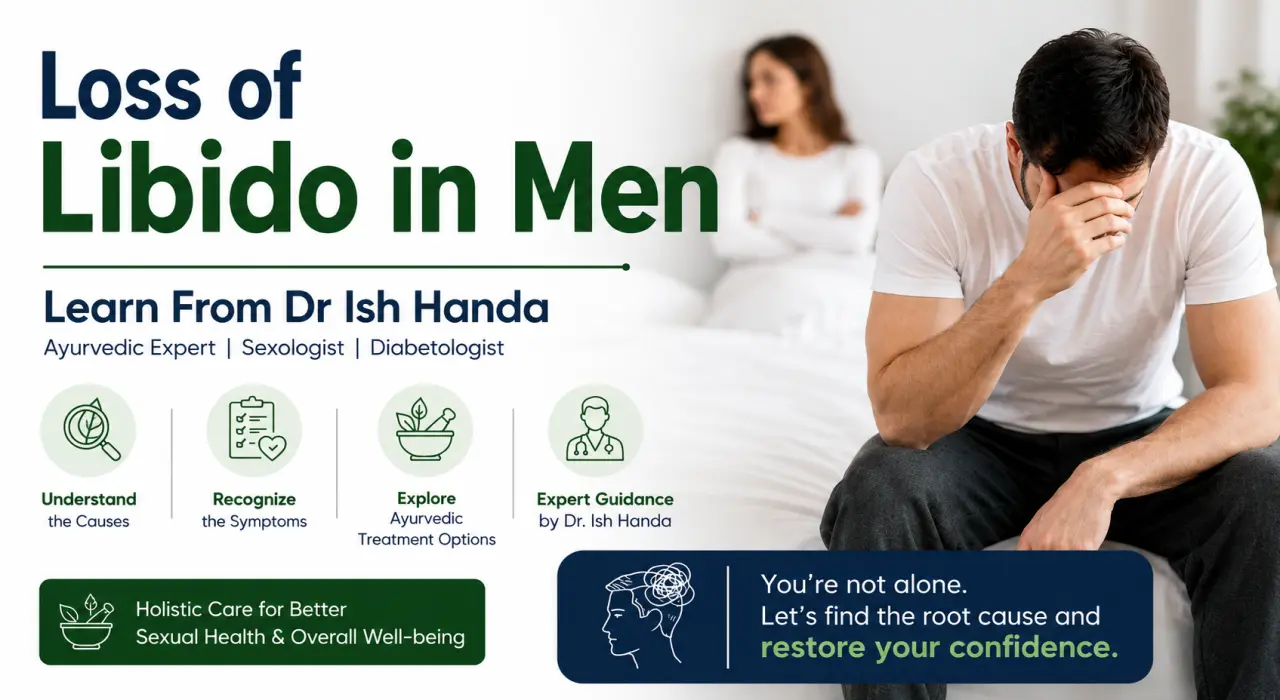
Loss of Libido
Loss of libido, also known as low libido or reduced sex drive, is a common concern that can affect men of all ages. While occasional changes in sexual desire are completely normal, a persistent lack of interest in sex may indicate an underlying physical, hormonal, psychological, or lifestyle-related health issue. Over time, it can affect not only intimate relationships but also self-confidence, emotional well-being, and overall quality of life.
Several factors can contribute to a reduced sex drive, including chronic stress, anxiety, poor sleep, low testosterone levels, diabetes, obesity, thyroid disorders, certain medications, unhealthy lifestyle habits, and other sexual health concerns.
In this article, you’ll learn what loss of libido is, its common symptoms, possible causes, diagnosis, treatment options, and how Ayurveda may support overall sexual wellness.
What Is Loss of Libido?
The low libido is the constant lowering of sexual desire or the loss of interest in sexual activity. Also known as low libido or reduced sex drive, it is not a disease itself but often a symptom of an underlying physical, hormonal, psychological, or lifestyle-related health issue.
A healthy libido depends on several factors working together, including balanced hormone levels, good physical health, emotional well-being, quality sleep, and a healthy relationship. When one or more of these factors are affected, sexual desire may gradually decrease.
A low libido does not always mean a person has erectile dysfunction or infertility.
A low libido does not always mean a man has erectile dysfunction or infertility. Some men with reduced sexual desire are still able to achieve normal erections and father children, while others may experience more than one sexual health concern at the same time. Understanding the difference is important because each condition has different causes and treatment approaches.
One of the most common misconceptions I hear in my clinic is that a reduced sex drive is simply a normal part of aging.
Doctor’s Tip: Never assume that reduced sexual desire is simply a normal part of aging. In many cases, identifying and treating underlying conditions such as diabetes, obesity, poor sleep, or hormonal imbalance can significantly improve both sexual health and overall well-being.
Is Losing Interest in Sex Sometimes Normal?
Yes. Every man experiences natural changes in his sex drive from time to time. A temporary decrease in sexual desire is usually nothing to worry about and does not always indicate a medical problem. It can happen due to physical fatigue, emotional stress, poor sleep, illness, work pressure, or relationship challenges. In most cases, sexual desire returns once these underlying factors improve.
However, if your sex drive remains low for several weeks or months, or starts affecting your relationship, confidence, or quality of life, it shouldn’t be ignored. A persistently low libido is often a symptom of an underlying health condition rather than simply a part of aging.
Constantly decreased libido is mostly an indicator of something wrong in the body rather than a common occurrence that comes with growing older.
When is it considered normal?
Temporary changes in libido are usually considered normal if they:
- Occur during periods of stress, illness, or fatigue.
- Improve after adequate rest, better sleep, or recovery from illness.
- Do not significantly affect your relationship or daily life.
When should you be concerned?
Consider seeking medical advice if you notice:
- A persistent loss of sexual desire lasting several weeks or longer.
- Reduced libido along with erectile dysfunction, fatigue, or low energy.
- A noticeable irregularity in morning erections.
- Loss of interest in intimacy without an obvious reason.
- Symptoms that are affecting your relationship or emotional well-being.
Insight by Doctor Ish Handa:
One of the most common misconceptions I hear in my clinic is, “Doctor, this is happening because I’m getting older.” While age can influence hormone levels, persistent low libido is often linked to treatable conditions. Identifying the underlying cause early gives us the best opportunity to improve both sexual health and overall well-being.
Common Symptoms Of Loss of Libido
Loss of libido can develop gradually or occur suddenly, depending on its underlying cause. Some men notice they think about sex less often than before, while others lose interest in intimacy despite having a healthy relationship. The symptoms vary from person to person and may range from mild to severe.
A temporary decrease in sexual desire is common during periods of stress, illness, or fatigue. However, if these symptoms continue for several weeks or begin affecting your confidence, relationship, or daily life, they deserve medical attention.
Men experiences one or more symptoms:
- Less or no interest in sexual activity or intimacy.
- Fewer sexual thoughts, fantasies, or spontaneous sexual urges.
- Little or no desire to initiate sexual activity with your partner.
- Difficulty becoming mentally or emotionally aroused.
- During sexual activity you don’t feel satisfaction anymore.
- No emotional feeling during intimate.
- Loss of confidence related to sexual performance.
- Persistent fatigue, low energy, or lack of motivation.
- Mood changes. Such as low mood, irritability, or anxiety.
- Reduced frequency of morning erections, especially when associated with hormonal imbalance.
Not every man with low libido experiences all of these symptoms. In many cases, the symptoms develop slowly, making them easy to overlook until they begin affecting daily life or relationships.
From Dr. Ish Handa’s Consultation
With over 17 years of clinical experience in Ayurveda, men’s sexual health, diabetes management, fatty liver care, and general medicine, Dr. Ish Handa has consulted thousands of patients with concerns related to reduced sexual desire and overall wellness. The following clinical scenarios are inspired by common questions discussed during consultations. They are shared for educational purposes to help patients better understand the possible causes of reduced sexual desire and the importance of seeking timely medical advice.
Patient 1: A Newly Married Professional (Age 29)
Patient’s Concern:
I was married 3 months before. I love my wife, but recently I don’t feel interested in sex as much as before. My erections are normal, but my desire has reduced. Is something seriously wrong with me?
Clinical Assessment
During our consultation, he explained that he worked 10–12 hours a day, slept only 5–6 hours each night, often skipped meals, and was constantly under work-related stress. There was no history other medical conditions.
As his complaints were new and no evidence of hormonal deficiency was found, I advised him to improve his sleep, manage stress more effectively, exercise regularly, and undergo a basic health evaluation if his symptoms continued.
Explanation by Dr. Ish Handa
Many younger men assume that a reduced sex drive automatically means they have low testosterone. In reality, chronic stress, poor sleep, mental fatigue, and unhealthy lifestyle habits are among the most common causes of temporary low libido in otherwise healthy men.
Patient 2: A Man Living with Diabetes (Age 39)
Patient’s Concern
I’ve had diabetes for almost eight years. Over the last year, I’ve completely lost interest in sex. My energy is low, and my married life is being affected.
Clinical Assessment
He presented his latest medical reports showing poor control of his blood sugar levels. He complained of feeling tired and experiencing occasional erectile dysfunction and lack of morning erections. From the above complaints, I suggested a thorough assessment, including hormones test, stressing the need for effective treatment of diabetes.
Dr. Ish Handa’s Explanation
It can affect sexual desire in several ways. Poorly controlled blood sugar may influence hormone balance, nerve function, blood circulation, and energy levels. Many men with diabetes also experience fatigue or erectile dysfunction, which can further reduce confidence and interest in sex.
Patient 3: Obesity and Fatty Liver (Age 45)
Patient’s Concern
My ultrasound showed fatty liver, and I’ve gained nearly 15 kilograms over the past few years. Could this be the reason my sex drive has reduced?
Clinical Assessment
His records showed that he had a fatty liver and was obese, and his lifestyle suggested low exercise activity and the use of processed foods on a regular basis. In addition, he stated that he felt exhausted, had bad sleep and low self-confidence. I told him that the tests for glucose, liver functions, and hormones will allow us to determine the reasons for his condition.
Explanation by Dr. Ish Handa
Fatty liver disease is often associated with obesity and insulin resistance, both of which can affect hormone balance and overall metabolism. Excess body fat may also contribute to lower testosterone levels, chronic inflammation, and fatigue, all of which can gradually reduce sexual desire.
Patient 4: “Should I Take Testosterone?” (Age 52)
Patient’s Concern
My friends suggested testosterone injections because my sex drive has become very low. Should I start taking them?
Clinical Assessment
This individual had not taken any hormone tests. The patient was hypertensive, overweight, and under various medications. Prior to hormone treatment, I recommended a thorough medical assessment and lab investigations that would help pinpoint the underlying reason for his symptoms.
Explanation by Dr. Ish Handa
A reduced sex drive does not automatically mean you have low testosterone. Similar symptoms can also occur due to diabetes, obesity, thyroid disorders, poor sleep, chronic stress, or medication side effects. That’s why hormone therapy should only be considered after a proper medical evaluation confirms a deficiency.
Key Takeaway from Dr. Ish Handa
Loss of libido is rarely caused by a single factor. In most men, it develops because of a combination of physical health problems, hormonal changes, emotional well-being, lifestyle habits, and existing medical conditions. Identifying the underlying cause is most important and very first step for effective treatment.
When Should You See a Doctor?
Many men experience temporary changes in their sex drive due to stress, fatigue, or lack of sleep. However, if your symptoms continue for several weeks or begin affecting your relationship, confidence, or overall quality of life, it’s important to seek medical advice rather than ignoring them.
Consult a doctor if:
You have been suffering from a low libido for more than 4-8 weeks and no apparent cause for this can be found.
It’s possible that you may be experiencing low libido alongside Erectile Dysfunction (ED), premature ejaculation, challenges with maintaining an erection, or a decrease in morning erections.
You have diabetes, obesity, fatty liver, thyroid issues, or any other chronic diseases which could influence your sex life.
You feel constant tiredness, weakness, depression, or muscle weakness, which means you might have hormonal imbalances.
You feel how your symptoms start to interfere with your relationship or affect your emotional state and self-confidence.
You are taking some medications which you think can affect your sex drive.
Dr. ISH HANDS Advice
In my years of practice, I’ve encountered numerous cases where men have suffered from low libido in silence as they were sure that it was something that was inevitable and associated with the process of aging.
Low libido is not something one should feel ashamed of. Very often, it is your body trying to signal that there is something wrong. The sooner the underlying cause is identified, the better the chances of improving not only your sexual health but also your overall physical and emotional well-being.
Avoid self-medication, don’t rely on unverified supplements or online advice, and never ignore symptoms that persist. A proper medical assessment and a personalized treatment plan are often the most effective way to restore your health and confidence.
If you’re looking for a best sexologist doctor in Ludhiana, Punjab, India for the evaluation of low libido, erectile dysfunction, or other men’s sexual health concerns, scheduling a consultation with an experienced specialist can help identify the underlying cause and guide appropriate treatment.
Every patient is different. The treatment that works for one person may not be suitable for another. If you’ve been experiencing a persistent reduction in sexual desire, consult Dr Ish Handa for a comprehensive evaluation to identify the underlying cause and discuss the most appropriate treatment options.
– Dr. Ish Handa
Ayurvedic Physician | Sexologist | Diabetologist | Fatty Liver Expert | General Physician
FAQs
What is the most frequent reason for low of libido in men?
Loss of libido does not result from one thing. It may happen due to uncontrolled diabetes, obesity, low level of testosterone, stress, anxiety, depression, insomnia, thyroid diseases, use of particular medications and poor lifestyle habits. The proper medical examination is essential for the identification of the causes and the right treatment.
Are loss of libido and erectile dysfunction the same things?
No, these two conditions are not identical. Erectile dysfunction implies the absence of ability to get or keep the erection while reduced sexual desire is characterized by lack of sexual interest. While these two conditions can occur at once, there are men suffering from low of libido but able to have normal erections, and vice versa.
Can diabetes cause reduced interest in sex?
Yes. Diabetes can influence hormone levels, blood flow, nerves, and general energy level of a person leading to the loss of sexual desire. Proper treatment of this disease is very important for preserving your sexual health.
Could Ayurveda treatment help a man with low libido?
An Ayurvedic expert will take into account different factors like general state of health, digestive process, lifestyle, stress, and body type. Based on this, the expert will suggest a special diet, lifestyle changes, and herbal medications. Nevertheless, it is recommended to diagnose low libido in order to identify any underlying disease.
Is it necessary to take testosterone supplements if my sex drive is reduced?
Never before checking your condition! The thing is that a low sex drive does not mean a low testosterone. Such a problem may be caused by diabetes, obesity, thyroid diseases, medications, stress and lack of sleep.
Does stress and lack of good sleep affect sex drive?
Definitely. Stress, anxiety, fatigue and lack of sleep may have an impact on hormone production, mood, energy level, and sexual desire. It often happens that better sleep and stress management will allow you to restore your sex drive.
Concerned about a persistent loss of libido?
If your symptoms have been affecting your health, confidence, or relationship, schedule a consultation with Dr. Ish Handa for a comprehensive evaluation. Identifying the underlying cause is the first step toward appropriate treatment and long-term improvement.