

Premature Ejaculation: Diagnosis, Medical Tests and Ayurvedic Assessment
Many men worry that ejaculating sooner than expected automatically means they have premature ejaculation. It is important to note that diagnosis is done through a combination of various factors such as whether the ejaculations happen early than planned, whether there is lack of control or not, it affects the individuals and relationships negatively.
Premature Ejaculation diagnosis is carried out after a thorough consultation in which the physician asks about sexual history, symptoms, overall health condition, medications as well as lifestyle. There is usually no special laboratory test required for diagnosing premature ejaculation. Further tests can be recommended if the physician suspects there might be underlying health conditions.
Understanding the diagnosis process of premature ejaculation can help you know what to expect during a consultation.
Clinicians should assess medical, relationship, and sexual history to make the diagnosis of PE
AUA/SMSNA clinical guidance
What Is Premature Ejaculation?

Premature ejaculation (PE) is a common sexual concern whereby a person ejaculates earlier than he desire, without much ability to control it. In some men, it may occur from the time they start having sex. This may gradually red gradually decrease your sexual timing.
It is not diagnosed only by the duration of sexual intercourse. Doctor also consider various aspects including ejaculatory control, frequency, duration, and level of distress.
How Do Doctors Diagnose Premature Ejaculation?
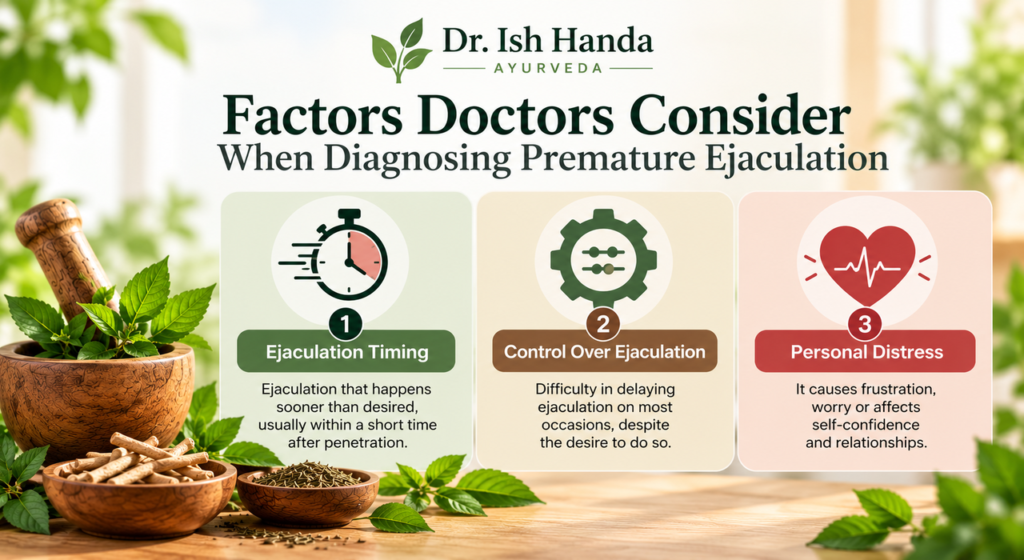
There is not a single laboratory test that confirms premature ejaculation. Diagnosis starts from the discussion between the patient and the doctor.
The doctor will ask when the problem started, how often it occurs, what level of control over ejaculation, and its impact on life. The doctor may ask for more information regarding the quality of erection, sex drive, medication, life habits and presence of other illnesses.
This process does not merely involve finding out how soon you ejaculate. It helps the doctor to identify the pattern of symptoms and their impact on your life.
In the majority of patients, taking a medical and sexual history gives all the necessary information to evaluate premature ejaculation. Further examination or tests may be required if there are signs indicating other diseases.
What Will a Doctor Ask?
“The diagnosis of PE is based mainly on a detailed sexual history”
Sexual Medicine Society of North America (SMSNA), Premature Ejaculation
The evaluation involve sexual history, overall health, and how this issue affects your life. One needs to give accurate and honest information so that doctor will able to understand symptoms more clearly.
When Did The Condition Start?
The doctor want to know whether you always experienced premature ejaculation or this problem only started after you had normal functioning. This way, your doctor will be able to differentiate between lifelong and acquired premature ejaculation.
How Frequent Is The Condition?
You may be asked how often this problem occur, is it an occasional thing or do you experience it every time.
Can You Control Ejaculation?
The doctor will inquire whether you can delay ejaculation on your will. Limited ability to control is one of the important part of the diagnosis.
Does it affect you emotionally or impact your relationships?
Another question may be about how the condition affects your self-esteem, mood, sexual enjoyment, and relationships. If the condition affects significantly, then this problem needs to diagnose as soon as possible.
Are There Any Other Signs of Sexual Dysfunction?
There are few other issues such as erections, low libido, painful ejaculation, etc.
Medical History
“Laboratory or physiological testing should be directed by specific findings from history or physical examination and is not routinely recommended.”
— European Association of Urology (EAU)
Medical history is helpful to the doctor to identify health conditions, or any other things, which may cause the problem of premature ejaculation. Doctor will inquire about any sexual performance problems, medications or supplements you are currently taking and your previous medical conditions. If you have ejaculation problem along with diabetes, thyroid, or erection difficulties then doctor may consider these factors during the assessment and recommend further evaluation when necessary.
During the consultation, the doctor may ask:
- Existing health conditions: Including diabetes and thyroid disorders, where relevant.
- Medications and supplements: Some medicines or changes in medication may be relevant to your symptoms.
- Erectile function: Whether you have difficulty getting or maintaining an erection.
- Previous treatment: Whether you have tried any treatments and how you responded.
Physical Assessment
The diagnosis of premature ejaculation does not usually need a physical examination. When symptoms or medical history point to an underlying physical disease then doctor may recommend further medical examination.
The review of your general health and evaluation of related physical issues can also be considered, depending on the symptoms. If the results show that more medical test or investigations needed then the doctor should refer you to a specialist.
In most situations, premature ejaculation can be evaluated by taking a thorough history from you about your medical and sexual health.
Your doctor may order more tests in case the symptoms you present, your medical history, or even the physical examination indicates that you may have some health problems that need to be checked.
Blood Tests
When your doctor thinks that you may have diabetes or another metabolic disorder that could play a role in your symptoms, he may suggest you for blood tests.
Hormonal Tests
Not every patient who suffers from premature ejaculation has to undergo tests of their hormone levels. However, if your doctor find out symptoms indicating hormonal imbalance like decreased libido then he will ask you do the hormonal test.
Urinal Tests
If you have urinary symptoms, your physician may recommend a urine test.
When Do You Need Other Investigations?
Additional examinations and consultations with specialists should be conducted in case where symptoms point to the presence of some underlying health condition. Particularly where sudden appearance of premature ejaculation is associated with pain, issues with urination, and problems with erections.
The most important thing here is that all the necessary tests should be conducted according to your symptoms and clinical picture rather than just as an additional step in your treatment.
Lifelong vs Acquired Premature Ejaculation
It is very important to know when a person started having early ejaculation because this will help in making an accurate diagnosis. There are two types of premature ejaculation that doctors recognize and these include lifelong premature ejaculation and acquired premature ejaculation.
Lifelong Premature Ejaculation
Premature ejaculation during a man’s life starts from his very first experiences of sexuality. It happens earlier than expected and is not controlled well.
When visiting a doctor for treatment, during the discussion, the doctor will ask information about sexual history, frequency of the problem, and its effect on sexual activity.
Acquired Premature Ejaculation
Acquired premature ejaculation develops after a period of satisfactory ejaculatory control.
In this situation, the physician will be very careful about looking at things like erectile functioning, stress, and medical conditions that might have led to this issue.
Why Does This Distinction Matter?
There may be different ways in which each health issue can be addressed and managed. Knowing when these symptoms started, will help doctor determine if any further investigation is needed or not.
These two conditions requires different approaches and management. Identifying when the symptoms began helps doctor decide whether to investigate possible contributing conditions and recommend an appropriate plan based on your individual circumstances.
What Other Factors Does a Doctor Consider?
Premature ejaculation is not always caused by one particular contributor. As part of the diagnosis process, the medical practitioner will have to look into the psychological, sexual, and physical causes of the condition.
Dr. Ish Handa insists on the need for a personalized assessment of each case rather than generalizing the cause of the problem.
Stress and Anxiety
The cause of ejaculation disorders may be linked to stress, performance anxiety, and concerns about sexual performance. The doctor may ask questions regarding any stressful or situational factors surrounding the occurrence of the problem.
Erectile Difficulties
While some individuals suffer from premature ejaculation and erectile dysfunction at the same time, these conditions tend to affect each other. Therefore, evaluating both will provide important facts and help in understanding the problem.
Sleep and Lifestyle
Issues related to sleep patterns, consumption of alcohol, smoking, exercise, and stress might also be brought up at the consultation. These issues give relevant information on your overall well-being, but do not necessarily form the basis of diagnosing PE on their own.
Medications and Other Health Conditions
The doctor may assess your medication and medical history for any contributing causes. In case of sudden onset of symptoms or symptoms appearing alongside other changes to your health, then more assessment is needed.
Dr. Ish Handa’s Clinical Perspective
According to Dr. Ish Handa, an Ayurvedic practitioner with experience in sexual health and lifestyle-related conditions, understanding a patient’s medical history is an important part of individualised care.
In the process of assessment, the doctor needs to take into consideration the various aspects, which include the symptoms such as medical background, stress levels, sleeping patterns, and lifestyle before suggesting any treatment to him.
How Is Premature Ejaculation Assessed In Ayurveda?
According to Dr. Ish Handa, an individualised approach is adopted wherein the practitioner need to understand the patient’s health conditions and symptoms before suggesting the best possible treatment. The following are some of the traditional Ayurvedic concepts taken into account during the process of diagnosis.
Prakriti and Individual Constitution
Prakriti refers to an individual’s constitution in Ayurvedic tradition. A practitioner can consider this along with other factors such as the patient’s symptoms, lifestyle, and general health condition while prescribing individual treatment.
Agni and Digestive Health
Agni means digestion and metabolism according to Ayurveda. This falls under the larger context of the analysis of diet, appetite and daily routine of the patient. Digestion alone cannot help in finding the cause of early ejaculation problem.
Sleep, Stress and Lifestyle
Quality of sleep, emotional distress, physical exercise, and routine can be useful in understanding the overall health of an individual. These can also be discussed along with sexual symptoms and medical history.
Individual Assessment
Dr. Ish Handa takes notes of the patient’s symptoms, medical history, and personal life before proceeding with any form of treatment. In cases of suspecting an underlying physical problem, a medical checkup is required.
The difference should be made between Ayurvedic evaluation and conventional medical diagnosis. Terms like Prakriti, Agni and Dosha belong to Ayurvedic philosophy. These cannot be regarded as any diagnostic test for premature ejaculation.
When Should You See a Doctor?
A rare incidence of early ejaculation may occur among many men without any underlying medical condition or cause for concern. In case the problem occurs frequently, is hard to control or causes anxiety, talking to a doctor would be a good way of finding out why this problem keep occurring.
Symptoms You Should Never Ignore:
Recurring Issue: Ejaculation takes place much earlier than desired, and you often feel that you are unable to control this.
Feel Insecure or Emotionally Upset: Anxiety, frustration, embarrassment, or distress results from this issue.
Relationship: The issue causes problems or tension within your relationship, because of decreases sexual satisfaction.
Changes in Sexual Function: The issue appears after a period of normal ejaculation control, especially if you suffer from erectile dysfunction or decreased libido.
Additional Symptoms: For example, pain during ejaculation, problems with urination or other symptoms need to be considered for the assessment.
Other Health Issues: You may have other health problems that need to be addressed.
Dr. Ish Handa’s Approach to Premature Ejaculation Diagnose
According to Dr. Ish Handa, premature ejaculation should be diagnosed after discussion with the patient, rather than just the time of ejaculation. Every patient has a unique history of symptoms medical conditions, and concerns. Therefore, the necessity for individualization of assessment is the first step towards solving the problem.
In the process of consultation, the doctor takes into account the history of sexual health of the patient, the occurrence of symptoms, lifestyle, level of stress, sleep habits, as well as any relevant diseases. Such information helps to form a better picture of the cause before suggesting treatment.
The doctor’s Ayurvedic treatment approach will consist of Prakriti and Agni as well. These concepts are important part of Ayurvedic assessment but they should not replace medical diagnosis and tests when required.
Dr. Ish Handa’s advice:
Do not assume that every case of premature ejaculation has the same cause. Start by understanding your symptoms and health history, then seek guidance suited to your individual needs.
Disclaimer: This article is for educational purposes only and is not a substitute for professional medical advice, diagnosis, or treatment. Consult a qualified healthcare professional for personalised guidance regarding your health.