
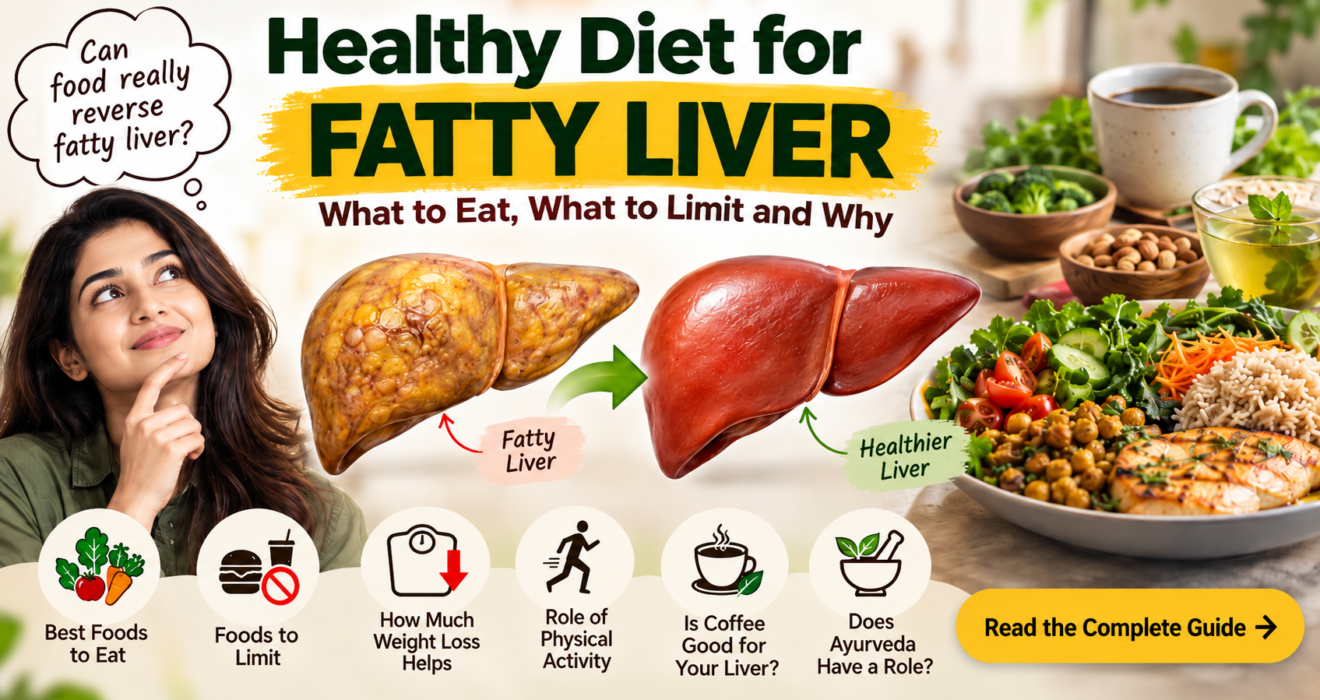
Healthy Diet for Fatty Liver: What to Eat, What to Limit and Why
Fatty liver is increasingly common, especially among people with excess weight, insulin resistance, type 2 diabetes, high cholesterol or triglyceride levels, and other metabolic risk factors. Alcohol can also cause liver fat, but not all cases of fatty liver are alcohol-related.
The good news is that a healthy fatty liver diet, combined with appropriate lifestyle changes, can help reduce liver fat. Nevertheless, a fatty liver diet is not about search for specific fruits, herbs or “detox” foods. The most important factors here are the dietary habits, the amount of calories consumed, body weight and physical activity level.
First, Understand What Causes Fatty Liver
Fatty liver develops when excess fat accumulates inside liver cells.
Fatty liver disease can be seen as having a relationship in many cases with being overweight, metabolic and sugar, high cholesterol or triglycerides, heavy or frequent drinkers of Alcohol, polycystic ovary syndrome (PCOS), underactive thyroid, sleep apnea, and/or certain genetic factors (the PNPLA3 gene variant).
The risk of fatty liver tends to increase with age, particularly in people who also have metabolic risk factors.
Fatty liver condition results from taking in more calories than the body requires, especially when the diet consists of refined carbohydrates and sugars. Physical inactivity of the body could worsen the condition.
Alcohol is another important cause. If alcohol is contributing to liver injury, reducing or avoiding alcohol becomes an important part of management.
This is why simply adding a “liver-friendly” food to an otherwise unhealthy diet is unlikely to solve the problem.
What Actually Helps Reduce Liver Fat?
There is no single food that can remove fat from the liver, it is combination of food. The overall dietary pattern and lifestyle are what matter.
Improving Diet Quality: A nutritional strategy that focuses on increasing intake of vegetables, whole foods, beans, whole grains, proteins, and healthy fats is more effective than just focusing on individual food.
Weight Loss: Those who suffer from overweight, gradual and steady weight loss may reduce the amount of fat in the liver and may even improve metabolic health. It depends on the person as well as the severity of the condition. The extent of weight loss varies based on individual circumstances and the degree of liver disease severity.
Regular Physical Activity: Regular physical activity helps in improving metabolic function and reduce fat stored in the liver even when significant weight loss does not occur.
Reducing/Stopping Alcohol Intake: Those individuals suffering from liver disease caused by alcohol consumption, should receive appropriate medical advice about alcohol consumption. In cases of other fatty liver diseases, avoiding alcohol can help, especially when signs of liver damage are there.
Diabetes Management and Fatty Liver Disease: High sugar levels, high triglyceride levels, and other metabolic conditions may contribute to the development of fatty liver disease.
It is important to note that these factors work together when the diet is nutritionally balanced. Then it is far more effective when used as part of a broader approach to changing one’s lifestyle.
“When I counsel patients with fatty liver, I do not ask them to search for one miracle food. I focus first on the reasons the liver has accumulated fat—such as excess weight, poor metabolic health, an unhealthy dietary pattern and lack of physical activity. Once we address those underlying factors consistently, dietary changes become much more meaningful.”
— Dr. Ish Handa, Ayurvedic Physician
Learn more about practical ways to naturally reduce fatty liver through diet and lifestyle changes.
What is Healthy Diet for Fatty Liver?
Vegetables
Make vegetables a staple in your diet. Leafy vegetables, cauliflower, broccoli, carrots, beans, tomatoes, cucumber, capsicum, gourds and other vegetables provide fibre and micronutrients while generally being low in calories. A simple suggestion is to make vegetables constitute a large portion of your lunch and dinner plate.
Whole Grains
Go for whole or minimally processed grains over refined grains. Depending on your existing diet, this could include whole-wheat roti, oats, brown rice, barley and other whole grains.
Legumes
Dal, chickpeas, kidney beans, black beans, peas and other legumes provide protein and fibre.
They are especially valuable in an Indian diet since they can act as substitutes for some of the refined-carbohydrate-rich foods that Indians normally consume.
Protein
Include a good source of protein along with the meals.
Depending upon one’s preference, one can choose from fish, eggs, chicken, skimmed milk, curd, paneer in moderate proportions or tofu, soya and legumes.
Each individual’s protein requirement is different.
People having kidney problems and other medical conditions should consult their doctors/dietitians about their protein intake.
Nuts and Seeds
Nuts and seeds give us unsaturated fats, fibre and other nutrients. Some of the nuts and seeds that can be consumed in moderation are almonds, walnuts, pistachios, flax seeds and chia seeds.
They are nutritious and also energy-dense.
Fruit
Fruits can generally be included in a balanced diet plan.
One should always prefer whole fruit over fruit juice because whole fruit has fibre in it and it takes more time for the body to digest than fruit juice.
It does not mean that you have to stop eating fruit just because you have fatty liver.
Healthy Fats
The goal is to replace excessive amounts of saturated fat with moderate amounts of unsaturated fat rather than simply increasing total fat intake.
The important thing is moderation. Healthy fats are still high in calories, hence replacing high amounts of unhealthy fats with moderate amounts of healthy fats is better than eating high amounts of fats in general.
What Should You Limit?
Highly refined and Processed Foods
Consuming foods like ready-to-eat snacks, bakery items, processed meats, fried fast foods and other highly refined calorie-dense foods can make it harder to maintain a balanced diet and control calorie intake.
These foods are not necessarily “poison,” but they shouldn’t form the foundation of your diet.
Consuming foods like packaged snacks, bakery items, processed meats, calorie dense fast foods and many other highly processed foods can become difficult to manage a balanced intake of calories.
You don’t have to consider them poison; however, you shouldn’t form a regular part of your diet.
Sugary Drinks
Soft drinks, sweetened fruit juices, energy drinks, and other types of beverages containing sugar are some of the easiest ways to consume extra calories and sugars. Their regular consumption will only make weight and blood sugar control harder. Water or unsweetened tea and other low-calorie beverages would be a healthier choice.
Alcohol
If alcohol consumption is causing liver disease, it has to be considered very seriously. People who have any type of liver disease should consult doctor or Ayurvedic practitioner, about alcohol consumption issues.
Added Sugars
Avoid food items rich in added sugars such as sweets, desserts, breakfast cereals and snack items with added sugars.
Not every single gram of carbohydrates is bad for your health doesn’t mean you should eat anything with carbohydrates.
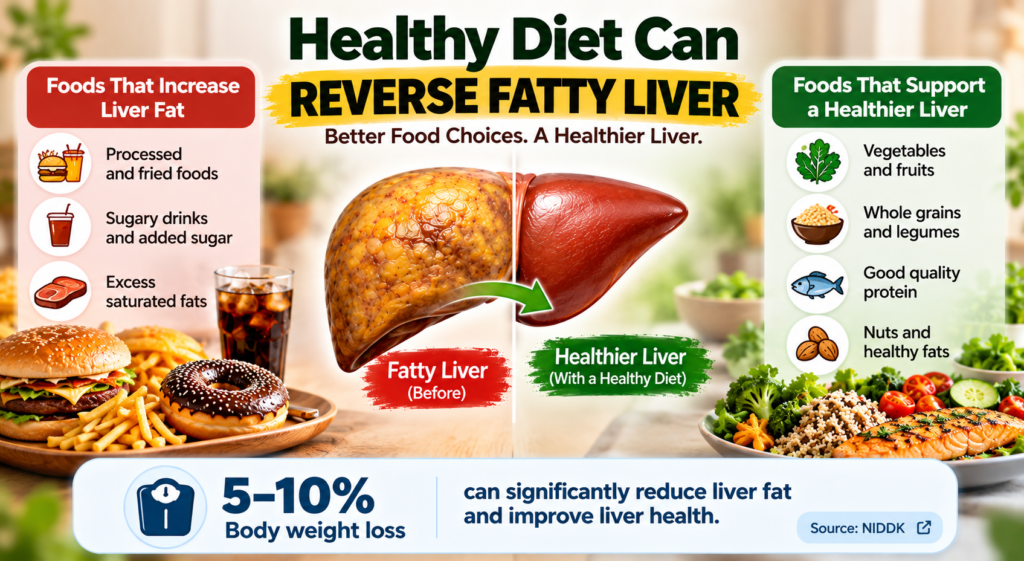
NIDDK recommends replacing saturated/trans fats with unsaturated fats and choosing more fruits, vegetables and whole grains while limiting foods and drinks high in simple sugars.
Too Many Calories
This is one of the most ignored aspects.
A diet which consists of healthy food items can also lead to weight gain if they provide you with excessive amount of calories.
Your target isn’t merely to classify good foods and bad foods. Instead, you must try to develop a balanced eating pattern.
Research from the National Institute of Diabetes and Digestive and Kidney Diseases (NIDDK) notes that losing at least 3–5% of body weight can reduce liver fat, while greater weight loss may be needed to improve inflammation and fibrosis
A Practical Fatty Liver Meal Pattern
A healthy fatty liver diet does not require a person to make a drastic change from the usual eating habits.
One can consume vegetable oats, vegetable poha, moderate quantity of whole wheat preparation, eggs and vegetables or any other balanced breakfast having proteins and fiber content.
During lunch, one can include a mixture of vegetables, dal or protein-rich food, moderate quantity of roti or whole-grain food and plain curd whenever possible.
An evening snack would be preferable as nuts, roasted gram or whole fruits rather than biscuits, sweets, and beverages with sugar.
Dinner too can be made in a similar manner, including vegetables + proteins + moderate quantity.
The quantity depends on your body size, activity level, diabetes status and medications.
The best diet is the one that works practically well rather than being theoretically perfect for two weeks.
Does Ayurveda Have A Role?
Ayurveda takes a broader approach to diet, digestive system and daily routine. Some of its traditional concepts about dietary recommendations can be incorporated easily into modern nutritional advice. Nonetheless, it is crucial to separate traditional practice from evidence-based treatment.
According to Dr. Ish Handa, an experienced Ayurvedic physician who works with patients suffering from liver diseases and metabolic disorders, Ayurvedic care should complement, rather than replace, appropriate medical evaluation and management. A person with fatty liver should not rely solely on an Ayurvedic remedy, herbal combination or “liver detox” to deal with the problem without considering such issues as overweight, lack of physical activity, poor blood sugar control and excessive alcohol consumption.
From Dr. Handa’s clinical point of view, Ayurvedic medicine should be personalized. Before recommending any herbal or Ayurvedic medicine, one should consider patient’s medical background, medications, lab results and general state.
Patients should not start herbal medicines on their own as some herbals do cause liver damage in some situations.
Therefore, patients need to consult with doctor or Ayurvedic expert practitioner, especially if they have any liver problems.
For patients interested in Ayurveda, the goal should be a responsible individualized approach appropriate dietary and lifestyle changes with proper medical monitoring. One can also read our guide to the Best Ayurvedic Medicine for Liver Detox for more information.
When Fatty Liver Needs Medical Evaluation
Fatty liver is not always a harmless condition.
There are people who have only fat in their livers, whereas some can also have inflammation, scarring. In advanced disease, this can eventually lead to cirrhosis.
Testing is even more crucial if you have elevated liver enzymes, diabetes, obesity, drink large quantities of alcohol, or if imaging revealed fatty liver.
It can include blood tests, metabolic testing, ultrasound and when needed, fibrosis scoring tests.
Normal liver enzyme levels do not necessarily mean that the liver is completely healthy.
When Healthy Diet Alone Isn’t Enough
Lifestyle changes are essential, but sometimes they are not enough.
When fatty liver occurs alongside diabetes, obesity, elevated triglycerides or high blood pressure, these conditions may also require active medical management.
There are some patients who already suffer from liver fibrosis despite reasonable changes in their lifestyle changes. In such cases, it is necessary to understand the reasons for developing liver disease than adding more foods or supplements into the diet.
The solution depends on each person and not on a general fatty liver diet plan.
Conclusion
The recommended healthy fatty liver diet is not necessarily an extensive list of foods, but rather a combination of foods.
Your diet should contain vegetables, whole grains, beans, protein, fruits, and unsaturated fat. Restrict the intake of sugar-sweetened beverages, refined sugar, highly processed foods, excessive intake of saturated fat, alcohol when required, and unneeded calories.
Remember, the development of fatty liver is not only associated with the diet but also a part of other metabolic disorders. Management of weight, physical activity, blood glucose control, lipid metabolism and proper medical consultation may be as important as the food that you consume.
In case you have been diagnosed with fatty liver disease, consult your healthcare provider regarding your individual risk factors and treatment plan instead of considering diet only.


1 Comment